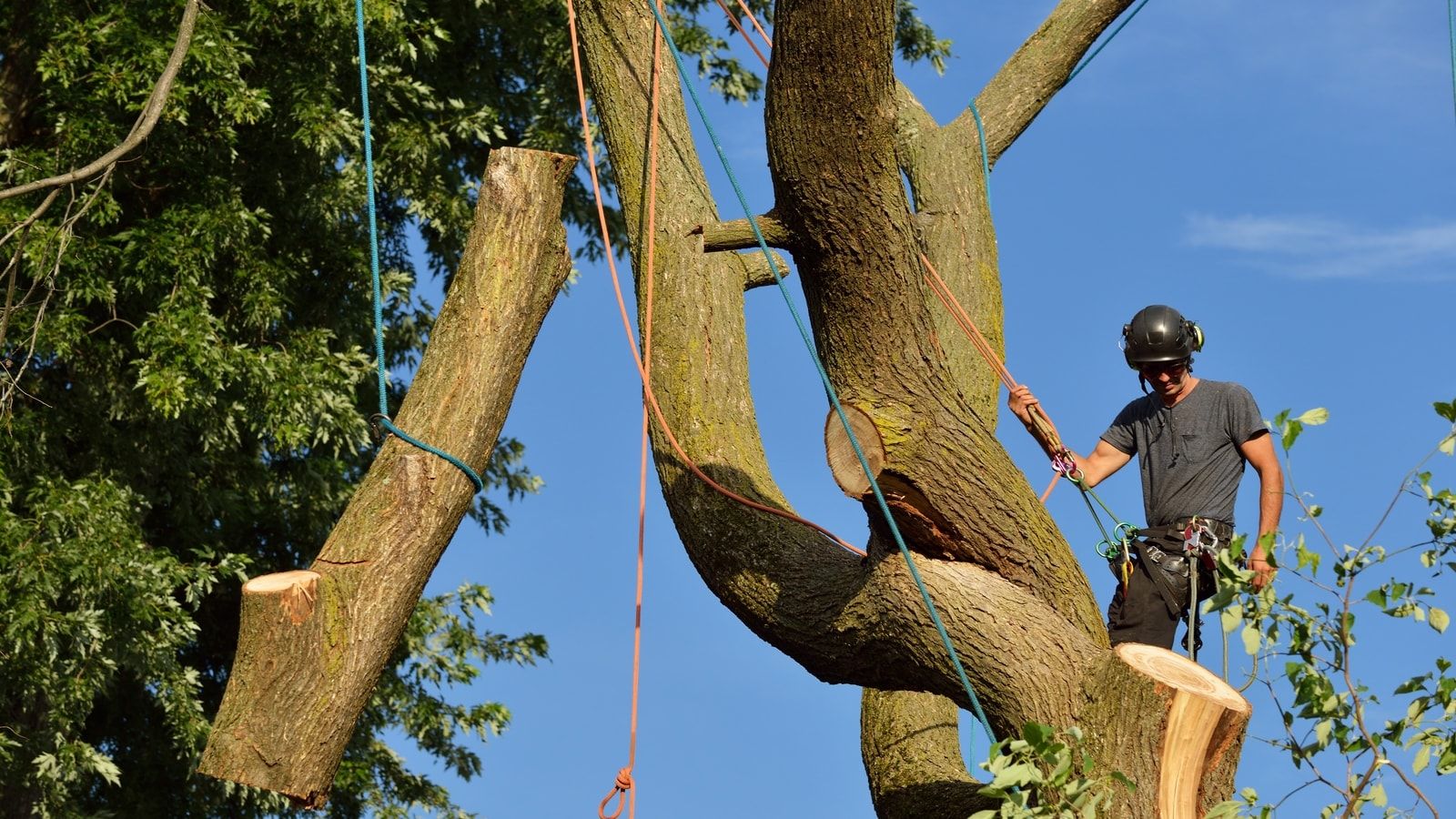
Trees bring shade, beauty, and natural greenery to your yard, but they also need regular care to stay healthy and safe. When a tree becomes weak, damaged, stunted, or begins to die, it can quickly turn from a landscape feature into a safety risk for your home and family.
That is why year-round tree maintenance matters, not just during storm season. Some trees only need trimming to remove weak or overgrown branches, while others may need to be removed entirely if the damage is too severe.
While homeowners can handle basic tree care, serious tree problems should not be treated as a DIY job. A damaged or dying tree can be unpredictable, and trying to fix or remove it yourself may lead to injury or property damage. Here are the key signs that it is time to call a professional:
1. Trees that Touch the Power Lines
When stems, twigs and foliage start to touch electricity lines, it can be a significant fire risk, eventually leading to dangerous tangles. This hazard should be reported immediately.
When done by untrained individuals, tree trimming near power lines poses a high risk for fire and injury, or even death, which may affect not just the person who attempted it but also the people and properties around it. Although it may look simple, calling a professional tree removal company is recommended if a tree in your property’s vicinity touches a power line.
2. Dying or Damaged Trees
Many wood-boring pests, like termites and beetles that snack on wood, will turn a dying tree into their home. When this happens, the damaged tree will eventually fall, which may harm someone or damage something. To avoid such accidents, dying trees should be removed as early as possible.
However, even healthy trees may be vulnerable to damage. Although proper care may help them recover in most cases, those with irreversible damage are best removed completely. But more importantly, healthy trees that have been damaged won't easily recover without the help of a tree expert.
If you feel unsure, it’s best to contact an arborist or tree expert to help you decide which course of action to take.
3. Trees With Unusual Insect Presence
Trees rely on insects for health and reproduction, but some insect species are harmful and may cause damaging diseases. For example, beetle species dig tunnels through tree trunks to lay eggs. This not only disrupts the tree’s supply of nutrients but may also cause damage to its structural integrity.
If tree professionals are available in your region, they can provide more information and help you identify potential issues with the tree in question.
4. Trees that Affect Your Home’s Exteriors
A tree's roots can grow through tough mud and stiff boulders, so they’re more resilient than you might think. But while it sounds impressive, it can be a cause of concern when they’re too close to your house or any other structure.
However, it’s not a good idea to cover this dilemma by just placing soil over the exposed roots. Depending on its proximity to a structure, it may be better to remove it completely.
Trees that get closer to your house when branches grow horizontally may also be dangerous. One wind gust is all it takes to break tree branches and cause them to smash your windows.
You may be tempted to trim the branches, but calling a professional is smart. More serious tree emergencies can also be caused by improper trimming, which may increase the risk of falling branches.
5. Splitting Branches
A weak branch may break, crack, split, or fall after a storm or during strong winds. Although falling branches may seem like an easy problem to solve, we shouldn't underestimate the injuries and damage they can cause.
Some companies offer emergency tree assistance, and they can come to your door within minutes, especially when there’s a threatening storm. Never attempt to cut down a branch yourself; it’s too risky.
Furthermore, when a tree’s trunk starts to crack or split, it’s also better to remove it. Trees that become too big for the area they’re in as they grow will also need removal.
6. Fungus Growth
If a tree's decaying roots are left alone, mushrooms and other microorganisms will begin to multiply. Because the roots hold the tree to the ground and maintain its nutrient supply, once they’re damaged, it won’t take long before the tree weakens.
When you see the beginning of fungus growth, it’ll help to remove it as early as possible before they damage the roots. The best time to check for this is a few days after a long period of rain, when the roots become moist and more susceptible to fungal growth.
7. Exposed Root Systems
A tree that noticeably leans on one side may eventually uproot itself, especially with strong winds. Trees that may fall are the most dangerous. Compared to falling branches, falling trees cause more severe injuries that may instantly kill their victims.
Conclusion
Many things can turn trees into a threat. If you live in an area with trees, especially big ones, it’s a good safety precaution to always check them for signs of accident risks, especially before and after a storm.
Even if they’re not on your property, be the good Samaritan who will save lives at every chance possible. When taken care of properly, trees can be an asset to your property instead of a safety threat.
But to ensure that your trees are healthy and well-maintained, it's always recommended to consult a professional, especially when changes have to be made.