
We evaluated the best dehumidifiers for homes and offices across New Zealand, comparing their moisture removal, features, ease of use, and overall value. Below, you’ll find everything you need to choose the right model for your space.
Let’s get started.
Our Top Picks
In a hurry? Here are our top three dehumidifiers in New Zealand:

Mitsubishi Oasis Dehumidifier
Best consumer, performance-choice dehumidifier with a permanent dust filter, LED display, 22 L daily capacity, and auto-restart feature.

De’Longhi Tasciugo Ariadry
Best portable dehumidifier with anti-dust filters, 30 L daily capacity, LED display, auto-restart, and humidity level control.
Sheffield 12L Dehumidifier
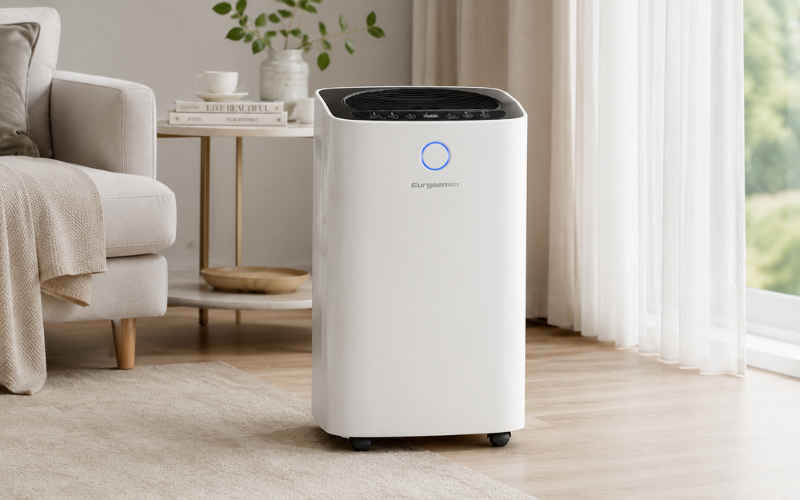
Best compact dehumidifier with a charcoal air-purifying filter, quiet operation, touch controls, and 12 L daily moisture removal.
Top 4 Dehumidifiers for Kiwis
After reviewing, researching, and evaluating several dehumidifiers on the New Zealand market, these six models stood out as the best. The mini-reviews below explain why.
1. Mitsubishi Electric 38L Oasis
Best Consumer Performance Choice Dehumidifier
Power: 365 W/h
Operating temp: 1 - 30o C
Warranty: 2 years
The Mitsubishi Electric Dehumidifier is a 3-in-1 appliance that controls humidity, purifies the air, and speeds up indoor laundry drying. With a moisture-removal capacity of up to 38 litres per day and a 5.5-litre water tank, it is well-suited to larger rooms and damp homes.
Its inverter compressor adjusts power consumption based on the room’s humidity level, helping improve energy efficiency without sacrificing performance. You can choose from several modes, including Auto, Rapid Dehumidification, Mildew Guard, Air Purifier, and Laundry Mode. The built-in PM2.5 filtration system also helps capture fine airborne particles.
The Intelligent Laundry Mode on the Mitsubishi dehumidifier uses 100-degree swinging airflow and multidirectional drying to target clothes or wet floors. It also ships with a backlit LCD that shows the current humidity level, and a 1-to-12-hour timer, child lock, and continuous drainage option.
Pros
- Large 5.5L water tank
- Built-in PM2.5 air purification
- Energy-efficient inverter compressor
- Multiple humidity and drying modes
- Continuous drainage option
- Child-lock feature
Cons
- Expensive
- Highest settings is noticeably louder
- Heavy at 18.1kg
2. De’Longhi Tasciugo Ariadry
Best Portable Dehumidifier
Power: 575 W/h
Operating temp: 5 - 32o C
Warranty: 2 years
The De’Longhi Tasciugo Ariadry Dehumidifier is the perfect choice for anyone looking for an easy-to-move dehumidifier. Although portable, this unit can remove up to 30 litres of moisture daily and is suitable for large rooms. It is lightweight and compact and has a comfortable handle that makes it easier to carry.
De’Longhi's Tasciugo Ariadry DD230P has a powerful fan that circulates air quickly, ensuring your room remains dry and odour-free. Its large water tank holds 6 litres, so you won’t have to empty it often. The unit has various features, including a timer, digital (LED) display, humidity level control, and automatic restart after power failure.
We recommend the De’Longhi Tasciugo Ariadry if you want an efficient, easy-to-move dehumidifier. Its impressive features and castors for portability help keep your home feeling fresh and dry.
Pros
- Adjustable humidistat
- Hygrometer to measure humidity
- Thermometer to measure ambient temperature
- Pump system for continuous drainage
- Anti-dust filters
Cons
- No child-lock system
- Dehumidifying mode only
3. Kogan SmarterHome Dehumidifier
Best Smart Dehumidifier
Rated power: 320W
Operating temp: 5 - 32o C
Warranty: 1 year
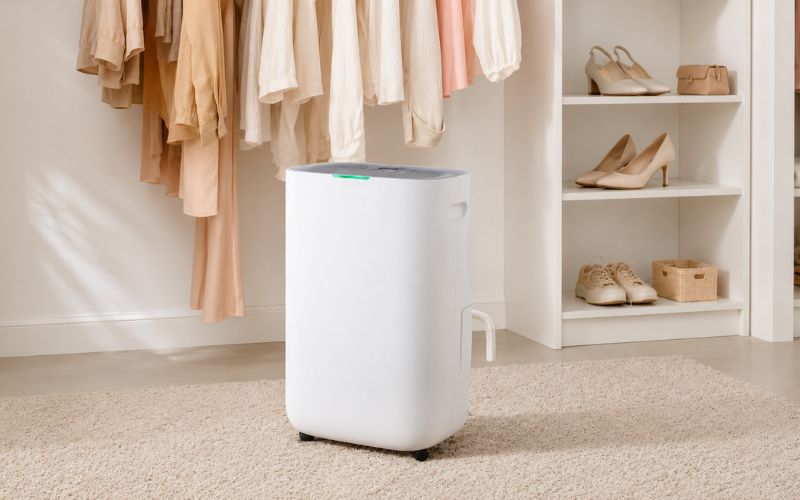
The Kogan SmarterHome 20L Dehumidifier is a practical option for controlling condensation and excess humidity in bedrooms, bathrooms, living areas, and other medium-sized spaces. It removes up to 20 litres of moisture per day and includes a generous 6.5-litre water tank.
As a smart dehumidifier, it ships with smart app control. Through the SmarterHome app, you can check humidity levels, adjust settings, and control the unit remotely. It also includes a 24-hour timer, automatic defrosting, continuous drainage, and automatic shut-off.
The dehumidifier's built-in handle and castors make it easy to move between rooms, while the washable filter helps reduce ongoing maintenance costs. It is reasonably quiet during operation, although the fan sometimes continues running after the target humidity is reached. Likewise, there's the occasional rattling or slightly awkward task of removing the water tank.
Pros
- SmarterHome app control
- Continuous drainage option
- Easy to move with castors and a handle
- Washable filter
- Good value
Cons
- Can be noisy at night
- Occasional rattling sound
- Sleep mode only turns off the display lights
- Water tank can be awkward to remove
4. Sheffield 12L Electronic Dehumidifier
Best Cheap Dehumidifier
Rated power: 185W
Operating temp: 5 - 35o C
Warranty: 2 years
The Sheffield 12L Electronic Dehumidifier is a compact option for managing everyday moisture in bedrooms, small living areas, and other spaces affected by dampness or condensation. It can remove up to 12 litres of moisture per day while using a relatively small 2-litre water tank.
It offers Auto, Continuous, and Sleep modes, along with three fan speeds, so you can adjust performance to suit the room and time of day. Plus, the humidity indicator makes it easier to monitor moisture levels, while the electronic touch controls keep operation straightforward.
There's also an active charcoal filter for basic air purification and to reduce unwanted smells. At 15 kg, it is heavier than its compact design may suggest, although built-in wheels make it easier to move. The smaller tank may also need frequent emptying in very damp conditions. Even so, its 12-litre extraction rate, sleep mode, air-purifying filter, and two-year warranty make it a practical choice for smaller homes and rooms.
Pros
- Compact design
- Active charcoal filter
- Auto, Continuous, and Sleep modes
- Humidity level indicator
- Three fan speeds
- Two-year warranty
Cons
- Heavy for its size at 15kg
- No smart app or remote control
- Frequent emptying
Why Is a Dehumidifier Important?
New Zealand’s humid climate can make dampness, condensation, mould, and mildew an ongoing problem in homes and workplaces. A dehumidifier helps by removing excess moisture from the air and collecting it in a built-in tank, leaving the space drier, fresher, and more comfortable.
Desiccant dehumidifiers absorb moisture and perform well in cooler conditions, while refrigerant models are effective at removing condensation in warmer rooms. Both types can help reduce mould growth, musty smells, and moisture damage to walls, furniture, and other household items.
Lower humidity levels can also make indoor spaces more comfortable for people with asthma or allergies by reducing conditions that encourage dust mites and mould. Excess humidity may also contribute to poor sleep, discomfort, fatigue, and breathing irritation, so keeping moisture under control can support a healthier indoor environment.
How Does a Dehumidifier Work?
A dehumidifier pulls moisture from the air, traps it, and then releases dry air into the room. It can do this using various methods, primarily desiccant and refrigerant technologies.
In both technologies, warm air is expelled from the machine, either directly outside or back into the room, once the moisture has been removed. This process helps create a comfortable room with reduced humidity and fewer airborne contaminants.
Desiccant vs. Refrigerant Dehumidifiers
While both types of dehumidifiers reduce humidity and odours, you should be aware of some key differences before purchasing.
Desiccant Dehumidifiers
Desiccant dehumidifiers use chemical absorbent material to remove moisture from the air. As air is drawn into the machine, it passes over a cold evaporator coil, which cools the air and causes any water vapour to condense. The condensed water is absorbed into the absorbent material and held until released outside.
Reasons to buy
- Best to use in cooler environments or areas with temperatures below 20°C
- More energy efficient than refrigerant models
- Operates quietly
Reasons to avoid
- Takes longer to dehumidify a space
- Need more frequent replacements due to wear and tear
Refrigerant Dehumidifiers
Refrigerant dehumidifiers cool the air as it passes over an evaporator coil and condense any moisture on the coils. The condensed moisture is then collected in a container that needs to be emptied periodically.
Reasons to buy
- Better suited to warm and humid conditions
- Advanced models can operate in colder temperatures
- More powerful than desiccant models
Reasons to avoid
- Noisier
- More expensive to run
How to Choose the Best Dehumidifier?
Consider these key features when buying a dehumidifier to ensure you get the right model for your needs:
#1 - Room size and moisture level
The room size you need to dehumidify and the air's moisture level are important factors to consider when choosing a dehumidifier. Small dehumidifiers are ideal for smaller rooms and spaces, while larger units can be used in larger rooms with higher humidity levels.
#2 - Capacity
Another essential factor is the dehumidifier's capacity, measured in Litres per day. Look for a high-capacity dehumidifier to ensure that it effectively removes moisture from the air. A higher capacity means the dehumidifier can remove more moisture from the air in less time. The best dehumidifiers have a capacity between 24 and 30 litres per day.
#3 - Energy efficiency
Consider the dehumidifier's energy efficiency, which its Energy Star rating can determine. Many modern dehumidifiers have energy-efficient features that use less power (W/h). A more energy-efficient dehumidifier can save you money on your electricity bill.
#4 - Noise level
Consider the unit's noise level, especially if you plan to use it in your bedroom or other areas where you'll spend a lot of time. Look for a unit with a low noise level of no more than 45 decibels.
#5 - Brand reputation and customer support
Consider the brand's reputation and customer support when shopping for a dehumidifier. Read customer reviews to understand how well the product works and how reliable the brand is. Also, check the warranty of the unit. Typically, a good warranty indicates the manufacturer's confidence in its product.
#6 - Additional features
Consider any additional features that you may find helpful, such as a built-in pump, humidistat, air purification, UV-C light, remote control, adjustable fan speeds, and automatic shut-off. These can all help you customise your dehumidifier to suit your needs.
#7 - Price
Price is an essential factor to consider when choosing a dehumidifier. Look for a unit that fits your budget but has the needed features and capacity. Dehumidifiers can range from relatively affordable to quite expensive, so set your budget and look for models that meet your needs without breaking the bank.
 Mark Thompson
Goodbye to Musty Odours
Dehumidifiers are essential appliances for any New Zealander looking to reduce moisture in their home or office. They are also an excellent solution to bad air quality and musty odours.
Fortunately, dehumidifiers, from relatively large and robust models to small and compact ones to suit your needs, are relatively affordable compared to other home comfort appliances. Be sure to consider your needs and choose the best fit for your home humidity needs or problems.





)