
Struggling to keep your home comfortable and healthy? Musty smells, damp air, or peeling and cracked paint could all point to excess moisture. A quality dehumidifier can help bring humidity levels under control and make your home feel fresher.
To make your search easier, we researched and compared a wide range of models to find the five best dehumidifiers in Australia. Whether you need one for a bedroom, laundry room, or your entire home, this guide will help you choose the right option. Let’s begin with our top three picks.
Our Top Picks
If you’re short of time, here are our top three picks:

AusClimate Cool Seasons Dehumidifier
Best overall dehumidifier for Australians with a nano-silver filter, 10 L daily capacity, and a 1°C to 40°C operating temperature range.

DeLonghi Tasciugo AriaDry
Best dehumidifier and air purifier with E12 filter, 21 L daily capacity, 2°C to 30°C operating temperature, and three ventilation speeds.
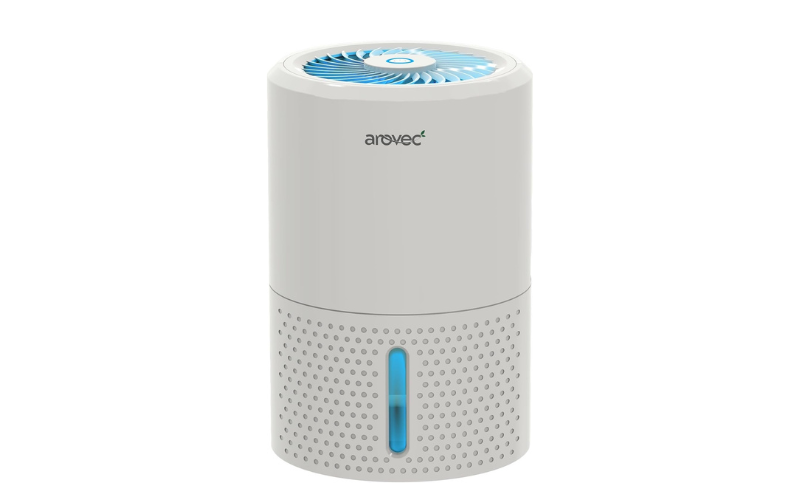
AROVEC Upgraded Dehumidifier
Best cheap dehumidifier with a 900 mL water tank, 300 mL daily extraction capacity, ultra-quiet operation, and automatic shut-off.
Top 5 Dehumidifiers for Aussie Homes
For our analysis and comparisons, we evaluated each product's performance, energy efficiency, capacity, and additional features to provide comprehensive insights for informed decision-making.
1. AusClimate Cool Seasons Premium 10L Dehumidifier
Best Overall Dehumidifier for Australians
Power: 730 Watts
Operating temp: 1°C - 40°C
Warranty: 2 years
The AusClimate Cool-Seasons Premium 10L Desiccant Dehumidifier is a strong choice for managing excess moisture, especially in homes that become cold during winter. It is suitable for open-plan areas of up to 50 square metres.
Unlike compressor models, this desiccant dehumidifier performs well in colder and unheated spaces. It can operate in temperatures as low as 1°C and as high as 40°C, making it useful throughout the year.
The dedicated laundry mode also helps clothes dry faster when cold or wet weather makes outdoor drying difficult. Other practical features of the humidifier include a nano-silver filter, a 12-hour timer, a three-litre water tank, automatic restart, and a continuous drainage option.
Pros
- Efficient in cold climates
- Auto-shut-off when the tank is full
- Includes laundry mode
- Ideal for 50 sqm rooms
Cons
- Tricky water tank removal process
2. DeLonghi Tasciugo AriaDry Pure Dehumidifier
Best Dehumidifier + Air Purifier
Power: 490 Watts
Operating temp: 2 - 30°C
Warranty: 2 years
Despite its compact build, the DeLonghi Tasciugo AriaDry Pure 21L 2-in-1 Dehumidifier and Air Purifier ships with a five-litre water tank, making it suitable for larger rooms of up to 90 cubic metres. It weighs 13.5 kg, has integrated handles, and 360-degree castors.
The unit can remove up to 21 litres of moisture per day. It also includes an E12 HEPA filter and dust filter to capture airborne particles and allergens. However, it does not have an activated carbon filter, so it is less effective at removing strong odours such as smoke or tobacco.
Tasciugo has three fan speeds that let you adjust the airflow, while the laundry mode helps clothes dry faster indoors.
Pros
- Easy to clean and maintain
- Wi-Fi and app connectivity
- Safe, non-toxic R290 refrigerant gas
- Doubles as an air purifier
- Features a laundry mode
Cons
- Inadequate E12 filter
- 2m cable length
3. Omega Altise OADE20 Dehumidifier
Best Value Dehumidifier

Power: 390 Watts
Operating temp: 5°C - 32°C
Warranty: 2 years
Another powerful option is the Omega Altise OADE20 Dehumidifier. Its built-in UV purification system helps reduce airborne impurities, while the ioniser and TI20 indicator support a fresher indoor environment by helping control mould and musty odours.
The automatic humidity controller monitors moisture levels and switches the unit on or off to maintain your chosen setting. It also includes a washable filter, making regular cleaning and maintenance more straightforward.
With a 3.7-litre water tank, the OADE20 can remove up to 20 litres of moisture per day. Although it is larger than some models, built-in castors and a carry handle make it easy to move between rooms.
Pros
- Portable and easy to move
- UV light air purifying system
- Ioniser indicator
Cons
- Only 2 fan settings
4. Mitsubishi MJ-EV38HR-A Dehumidifier
Best for Large Spaces

Power: 500 Watts
Operating temp: 5°C - 35°C
Warranty: 2 years
The Mitsubishi Electric MJ-EV38HR-A combines strong moisture removal with energy-efficient performance. Its inverter technology adjusts the compressor output as needed, helping reduce unnecessary energy use. It also includes a PM2.5 filter to capture fine airborne particles and improve indoor air quality.
The large 5.5-litre tank supports a daily extraction rate of up to 38 litres, making the unit suitable for larger rooms and high-humidity conditions. Other useful features include a child lock, three multidirectional airflow settings, and impressively quiet operation on lower fan speeds.
The intelligent laundry mode is especially useful for homes without a tumble dryer. The unit monitors the room’s humidity and automatically adjusts the airflow as clothes dry. It then estimates the required drying time and switches off when the cycle is complete. Depending on the load and conditions, the laundry mode can run from around one hour to a maximum of 12 hours.
Pros
- User-friendly screen
- Excellent dehumidifier controls
- Remarkably quiet (max 48 dB)
- Easy-to-empty design
Cons
- Limited timer settings
- No suitable for full-day operation
- Difficult to move around
5. AROVEC Upgraded Dehumidifier
Best Cheap Dehumidifier
Power: 23W
Warranty: 2 years
The Arovec 900ml Dehumidifier is an affordable option for controlling light moisture in smaller spaces. It is designed for bedrooms, bathrooms, kitchens, caravans, wardrobes, and home offices. The unit can collect up to 300ml of moisture per day, has a transparent 900ml tank to monitor water levels, and an automatic shut-off feature that prevents overflowing.
Operating at under 30dB, the Arovec is quiet enough for overnight use, although you may still notice a low motor hum in very quiet bedrooms. We found it generally easy to operate, empty, and maintain, with many reporting good results in small bathrooms, bedrooms, and caravans.
This model is best suited to mild condensation and dampness rather than serious humidity problems. It will not perform as quickly as a full-sized compressor dehumidifier, particularly in large rooms.
Pros
- Compact and portable
- Suitable for rooms up to 15 m²
- Quiet operation below 30dB
- Low energy use
- Two-year warranty
Cons
- Slight motor hum
- Not powerful enough for large rooms
- No built-in humidity display
When Is It Appropriate to Use a Dehumidifier?
A dehumidifier is most useful when indoor humidity regularly rises above 50 to 60 per cent. It removes excess moisture from the air, making it especially helpful in damp areas such as bathrooms, basements, and crawl spaces.
It can also make the home more comfortable for people with allergies or respiratory sensitivities. Lower humidity levels reduce common triggers such as dust mites and mould spores. During hot, humid weather, a dehumidifier can also make rooms feel less sticky and more comfortable.
After leaks, flooding, or burst pipes, a dehumidifier can help dry the affected area more quickly and reduce the risk of further damage.
It is also useful for protecting moisture-sensitive items, including musical instruments, artwork, important documents, and electronics. Proper humidity control helps preserve these items and prevents warping, mould, and deterioration.
Dehumidifiers vs. Air Conditioners
Dehumidifiers and air conditioners serve different purposes. Dehumidifiers reduce humidity by extracting excess moisture. They do not significantly change the room's temperature and are suitable for use in areas with high humidity but moderate temperatures.
Conversely, air conditioners cool the air by removing heat and moisture. They reduce temperature and humidity effectively, making them ideal for hot and humid climates.
 Mark Thompson
Do I Need a Dehumidifier and Air Conditioner?
Air conditioning may help reduce indoor humidity. However, air conditioners alone aren't sufficient to control humidity levels in areas with exceptionally high humidity, particularly in the northern and northeastern parts of the country.
Is It Cheaper to Run a Dehumidifier?
Dehumidifiers are generally less expensive to run than air conditioners. Air conditioners cool the air and remove moisture, which requires additional energy. In contrast, dehumidifiers focus solely on moisture removal, which is more energy-efficient.
To determine the cost difference more accurately, compare the energy ratings or power consumption specifications of the dehumidifier and air conditioner models you are considering. Also, consider your climate, the severity of humidity issues, and how frequently you'll use each appliance.
How to Choose the Right Dehumidifier?
When searching for the right dehumidifier for your home or office, here are a few important considerations you should keep in mind:
#1. Consider the Space for Dehumidification
When choosing a dehumidifier, you must remember the size of the room where you will use the machine. You must pick the right size to fully maximise its function so the machine can do its job smoothly.
Likewise, we recommend measuring your area before purchasing a dehumidifier. It is better to buy a slightly bigger or more powerful dehumidifier than one underpowered.
Dehumidifiers Size Guide
- Small: 12-16 L (20 - 25m²)
- Medium: 20-25L (30 - 38m²)
- Large: 35 - 50 L (50 - 105m²)
#2. Consider the Humidity Level in Your Space
Consider the humidity of the room and the weather situation in which you plan to use the dehumidifier. A good humidity level ranges between 30% and 60% in all rooms of your house. Anything above or below this range can be unhealthy and lead to respiratory discomfort or other issues.
Use a hygrometer to measure the humidity of your room. It's the most accurate method. However, you can also try alternatives like the wet and dry bulb thermometer or ice cube method.
#3. Examine Available Options
When choosing which dehumidifier to purchase, it is essential to consider the additional features and functionality of the model to fully maximise the unit. Here are some of the features that you should consider when buying a dehumidifier:
- Humidistat: A built-in humidistat lets you set a specific humidity range for your dehumidifier.
- Auto-Restart: Dehumidifiers with an auto-restart feature automatically resume operation after a power outage.
- Portability: Whether you prefer a large or small dehumidifier, prioritise one that’s easy to move.
- Energy Efficiency: Choose an energy-efficient dehumidifier to run continuously without significantly impacting your electricity bill.
#4. Compare Product Options
Compare the prices of different dehumidifiers available on the market to get the most out of your investment.
Choose the dehumidifier with the most valuable features for your room condition within your budget. To give you an idea, dehumidifiers usually cost between $100 for smaller models and more than $1,200 for bigger models. So, make sure that you get the most out of your purchase.
7 Alternative Methods to Reduce Humidity at Home
These practical measures can help you create a more comfortable and humidity-controlled environment in your Australian home:
- Ventilate: Open windows and doors during dry weather to improve ventilation. We also recommend using exhaust fans in the kitchen and bathroom to remove moist air.
- Air Conditioning: Use air conditioners to cool and dehumidify the air. Use the "dry" or "dehumidify" mode if available.
- Fix Leaks: Regularly inspect and promptly fix any leaks to prevent mould and mildew growth.
- Dry Clothes Outdoors: Whenever possible, dry your clothes outdoors to prevent excess moisture indoors.
- Cook with Lids: When cooking, use lids on pots and pans to contain steam and reduce indoor humidity.
- Shower Wisely: Use exhaust fans during and after showers, and keep the bathroom door closed to prevent moisture from spreading.
- Seal Windows and Doors: Ensure proper seals around windows and doors to prevent humid outdoor air from entering your home.
Frequently Asked Questions (FAQs)
Here are some frequently asked questions about dehumidifiers in Australia.
How often do I need to empty the humidifier water tank?
Depending on the circumstances, you must empty your dehumidifier bucket between twice daily and once every two days. Once filled, a dehumidifier's water tank must be emptied before it can continue to function. The size, style, and type of dehumidifier all affect how frequently the unit needs to be emptied.
How often do I need to clean my dehumidifier?
Clean your dehumidifier at least once every three weeks. Unless you are pumping the water straight into a different drain, all of the moisture from the air ends up in the dehumidifier's bucket.
This means that when your dehumidifier is used frequently, its filtration system becomes dirty quickly and requires cleaning every three weeks to maintain effectiveness.
Mark Thompson
Final Note
Given Australia's wide range of climate conditions, it is safe to say that a dehumidifier is a must for every home. Choosing the right model will help create a healthier living space and protect your rooms’ structural integrity.
If you're in doubt, go with the AusClimate Cool Seasons Premium 10L Dehumidifier—the National Asthma Council Australia Sensitive Choice approves it. Still, consider your use case and unique requirements to choose the one that offers your money’s worth.






)