If you're looking to buy a desk in Australia, I recommend choosing one that lets you switch between sitting and standing throughout the day. I first put this guide together when I purchased my own standing desk, and it has since grown into a regularly updated roundup of the best options available.
I've personally assembled and tested the top six standing desks featured below over the long term, so my recommendations are based on firsthand experience rather than product specifications alone.
My Top Picks
If you need to make a quick purchase, here are my top recommendations. Each desk has been available on the market for years and has made numerous tweaks over time to perfect its desk offering.
They are all reliable, differing mainly in desktop design and colour options, features, and the trade-off between lifting speed and weight capacity. You really can't do wrong with any of the options below.

UpDown Pro Desk
Best overall with a 150 kg lifting capacity, 64–129 cm height range and 4 cm/s lifting speed with anti-collision, programmable presets and automatic power-saving mode.

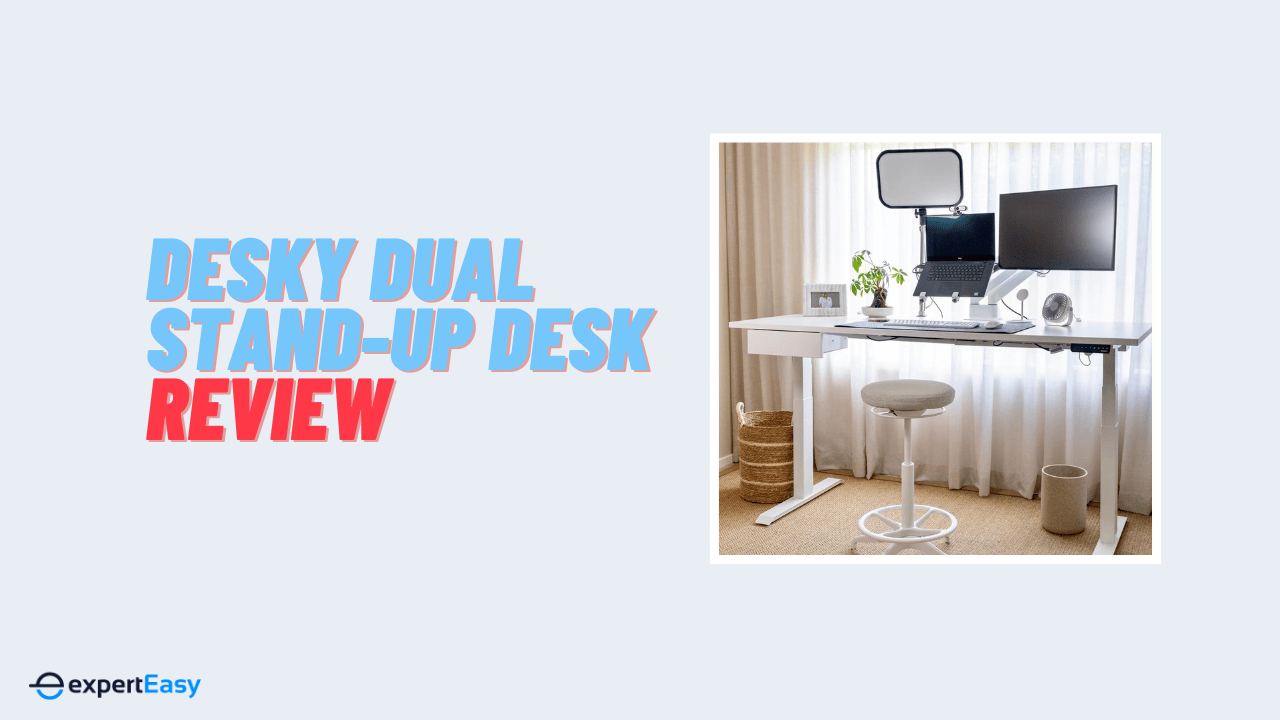
Desky Dual Stand-Up Desk
Desky Dual offers a 150 kg lifting capacity, an optional scalloped desktop for easier cable routing, and an integrated cable management system with optional power channels.

Artiss Standing Desk
Best budget standing desk, the Artiss offers a 100 kg lifting capacity, a dual-motor height adjustment system, and a choice of desktop sizes, colours and finishes at an affordable price.

Stand Desk Pro
The fastest lifting standing desk with 8 cm/s lifting speed, 150 kg weight capacity, sustainable packaging, integrated cable management and smart features.
Top 16 Standing Desks in Australia
I evaluated each desk’s performance over many factors and there is a rating table at the end of each product review to help you compare easily.
They include:
- Build materials used in the desk's construction, the build quality, and the desk's long-term reliability.
- Initial purchase price, and any additional expenses, such as delivery or assembly fees incurred.
- Comfort, which because is relative, I assessed how well the desk accommodates ergonomic and adjustable needs.
- The desk's look and feel (including colour options and finishes) and how it fits into your workspace.
At the end of this article, I share the full details behind my ratings.
1. UpDown Pro Desk
Overall, the Best Standing Desk in Australia
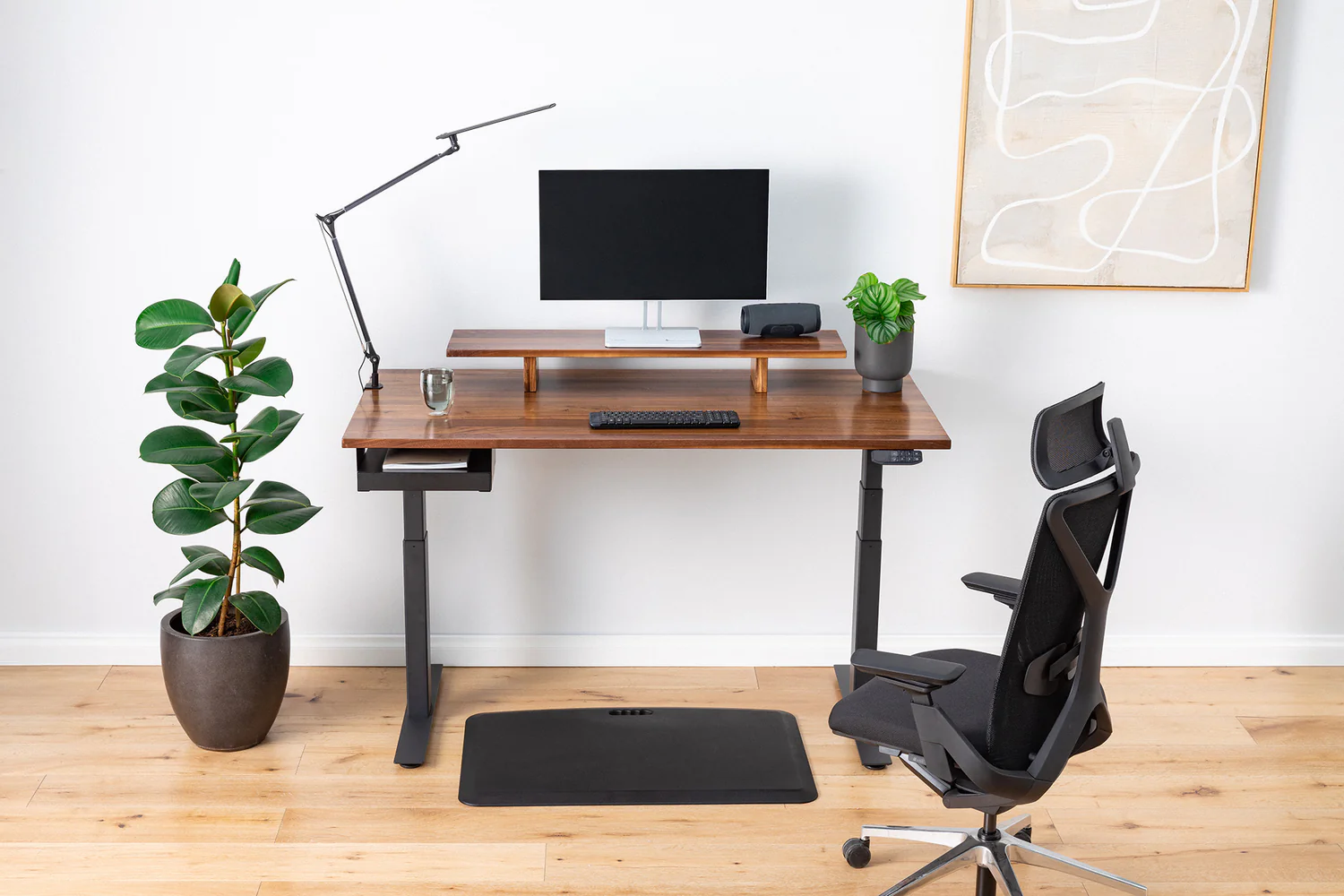
Desktop size: Up to 180 cm × 75 cm
Adjustable height: 64 - 129 cm
Lifting speed: 40 mm/sec
The UpDown Pro Desk takes first place in my review of the best standing desks in Australia, combining a wide range of options with a reasonable price. It earns that position against strong competition from the other desks I've tested, as you'll see below.
Why is the UpDown PRO Desk the Best in Australia?
I have the UpDown Pro Desk as the best overall standing desk in Australia for several reasons.

One of the strongest reasons I recommend the UpDown Pro Desk is its 100-day return policy, which gives you plenty of time to assemble the desk, use it in your daily routine and decide whether it's right for you. That's a valuable advantage, especially if you're making the switch for the first time.
There are, however, a few conditions worth knowing before you buy. Under UpDown's return policy, the desk must be returned undamaged, unmodified and fully disassembled in its original packaging. Required installation work is permitted, but you'll have to pay for return shipping, and any original delivery or installation fees are non-refundable.
Beyond its 100-day return policy, the UpDown Pro Standing Desk comes with a 10-year warranty covering the frame and electrical components. It's the level of protection I've come to expect from a premium standing desk, particularly one designed for everyday use.
The third reason I rank the UpDown Pro as the best overall standing desk is its build quality. Its heavy-duty steel frame supports up to 150 kg, making it suitable for demanding setups with multiple monitors and other equipment. Having tested it alongside competing desks, I was particularly impressed by its stability, sturdy construction and overall finish.
Unlike brands that focus primarily on standard laminate finishes, UpDown offers a broad selection of solid timber desktops, including Australian-sourced and locally manufactured options such as recycled Messmate and Australian Ash. Its wider range includes Walnut, Bamboo, Rubberwood, Pheasantwood and several Oak finishes, giving you plenty of choice across different budgets and preferences.
Of the finishes I've seen, Pheasantwood and Messmate are my favourites, followed by Victorian Ash and Acacia. I also like that UpDown continues to expand its desktop range, with options such as American Oak and Natural White Oak adding even more variety.
For a large Australian office fit-out involving multiple standing desks, I wouldn't recommend solid timber desktops, mainly because of the higher cost. For individual purchases or home offices, however, I consider hardwood worth the investment. It's durable, withstands years of daily use and offers the added advantage of being refinished if the surface becomes worn.

Beyond its build quality, the UpDown PRO+ has a strong range of features that make it practical for everyday use. These include:
- A height adjustment speed of 40 mm per second.
- Dual motors for smooth, consistent height adjustments.
- Anti-collision detection and a child lock for added safety.
- Bluetooth connectivity through the UpDown Desk Controller app, allowing you to adjust the desk's height from your phone.
- A power-saving mode that activates after 15 seconds of inactivity.
- A built-in USB-C charging port and cable management system.
I particularly like the four programmable memory buttons on the control panel, which let me save preferred sitting and standing heights rather than adjust the desk manually each time. They're useful when sharing a desk, as different users can save their preferred settings and switch between them with a single press.

I also like the simplicity of UpDown's control panel, which has dedicated up and down buttons for precise height adjustments and a USB-A port for charging devices. UpDown has since introduced an upgraded PRO+ controller with a USB-C port and Bluetooth connectivity, allowing you to adjust the desk's height and manage standing reminders remotely through the UpDown Desk Controller app.
Beyond the controls, I appreciate the flexibility UpDown offers when configuring a desk. With three standard desktop sizes and optional accessories such as castor wheels, lockable drawers, and monitor arms, there's plenty of room to build a setup around your workspace and equipment. This level of customisation, combined with the desk's solid construction and practical features, is what gives the UpDown PRO an edge over the competition in my review.
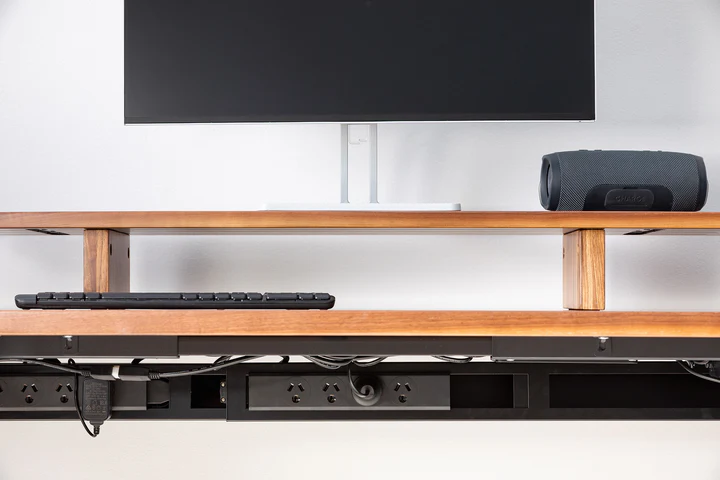
Another upside to getting the UpDown is that it offers many other accessories for cable management and desk organisation. The sit-stand desk ships with a Cable Management Tray, cable ties and clips.
For the best setup, I suggest getting the Integrated Cable Tray. It helps keep your desk tidy. It can slide and stretch up to 160 cm long. You can also plug in up to 12 devices using easy, click-in power boards.
Cons of the UpDown Desk
With the wide range of desktop options and accessories available, it's easy to end up spending more than your original budget if you choose the most stunning hardwood desktop and then go about adding many of the options, such as a power rail, a slimline metal drawer, or a cable tray.

UpDown's cable management system works well for most setups, although I prefer Desky's integrated options for workstations with a large number of cables and connected devices. UpDown has improved its classic cable tray with an unhooking design that makes it easier to access power boards and rearrange cables without removing the entire tray.
The classic cable tray and cable management accessories are now included with UpDown standing desks, while the upgraded integrated tray costs extra. You'll also pay separately if you want cable grommets installed in the desktop. I recommend having UpDown drill the holes before delivery, as drilling them yourself voids the 100-day money-back guarantee.
My other reservation is the standard desktop depth of 75 cm, which takes up considerable space in a smaller home office. UpDown does offer custom desktop dimensions on request, but if space is tight, I'd choose the Desky Dual Mini Sit Stand Desk, which comes in more compact sizes.
The Verdict

If you appreciate solid hardwood furniture, I recommend choosing one of UpDown's hardwood desktops. The natural timber feels substantial, has a beautiful finish and is slightly thicker than the standard desktop options. For me, it's worth the additional cost, particularly for a desk I plan to use for years.
To see how the UpDown PRO compares with the other standing desks I've tested, here's how I rated it across the key criteria.
| Category | Rating (5.0) |
|---|---|
| Build Quality | 4.9 |
| Ergonomics | 4.6 |
| Aesthetics | 4.7 |
| Cable Management | 4.7 |
| Customisability | 5.0 |
| Weight Capacity | 5.0 |
| Lifting Speed | 4.3 |
| Ease of Assembly | 4.4 |
| Value for Money | 4.6 |
| Return Policy | 5.0 |
| Warranty & Support | 5.0 |
| Overall | 4.8 |
UpDown Pro Price
The UpDown PRO+ standing desk starts at around $850–$900 with a melamine desktop, while premium hardwood finishes and optional accessories push the price beyond $2,000.
It's a considerable investment, but having tested the desk myself, its sturdy construction, stability and extensive customisation options justify the price, particularly if you're buying a desk for long-term use.
2. Desky Dual Stand-Up Desk
Best Standing Desk for Cable Management
Adjustable height: 60 - 125 cm
Desktop sizes: Up to 200 × 75 cm
Lifting speed: 36 mm/s
The Desky Dual Standing Desk comes in four sizes and five desktop materials, with an extensive selection of colours and finishes to suit different workspaces. I recommend the medium 150 × 75 cm desktop for most people, as it provides enough room for a home office setup. For professionals who need additional room for multiple monitors, documents and other equipment, I'd choose the extra-large 200 × 75 cm option.
The Desky Dual competes closely with the UpDown PRO and Stand Desk PRO, and in my previous update, I had Desky and Stand Desk tied for second place. I've since moved Desky ahead, largely because of its broader selection of desktop materials and finishes, which gives buyers more flexibility.
Stand Desk offers a more limited selection, with solid American Oak and American Walnut alongside bamboo and melamine options. However, its newer PRO V2 range has improved availability. While I still give Desky the edge for customisation, Stand Desk remains a strong competitor in terms of build quality and performance, as I'll explain later.

Having tested both desks, I found the Desky Dual and UpDown PRO closely matched in build quality, lifting performance and everyday usability. There are some differences in their specifications, but neither has a decisive advantage when it comes to the core features of a standing desk.
Both use a dual-motor lifting system and support up to 150 kg, making them suitable for workstations with multiple monitors and other heavy equipment. The Desky Dual has an adjustable frame height of 60–125 cm, while the UpDown PRO adjusts between 64 and 129 cm with the desktop installed.
These ranges are measured differently, so aren't directly comparable, but both offer substantial height adjustment.

Desktop choice is another area where Desky stands out, with a wide selection of materials, colours and finishes to suit different preferences. Its hardwood range even includes distinctive epoxy resin designs, where coloured resin runs through the natural timber grain. They're not particularly to my taste, but I appreciate the craftsmanship and visual appeal.
Desky offers melamine, bamboo, rubberwood, softwood and hardwood desktops, along with its resin hardwood collection. While this variety puts it on par with the UpDown PRO, Desky's current hardwood range doesn't include the native Australian timber options I particularly like from UpDown. Instead, I'd recommend looking at its Walnut, White Oak or Acacia finishes if you want a natural timber appearance.

Cable management is another area where I found little to separate the Desky Dual and UpDown PRO. Neither includes an integrated cable and power channel as standard, but both offer optional systems that keep cables, power boards and adapters neatly organised beneath the desktop.
Desky's integrated cable and power channel supports up to 12 power sockets, matching UpDown's maximum capacity. UpDown's system also includes a cable management kit with ties, clips and an organiser, which I appreciate for keeping smaller cables under control. Both systems offer convenient access when you need to add or rearrange devices.
Where I give Desky a slight advantage is its optional scalloped desktop design. The cut-out along the rear edge provides space for cables to pass behind the desk without getting trapped against the wall, making it easier to maintain a tidy workspace.
The differences are genuinely minor, and I wouldn't choose one desk over the other based on cable management alone.
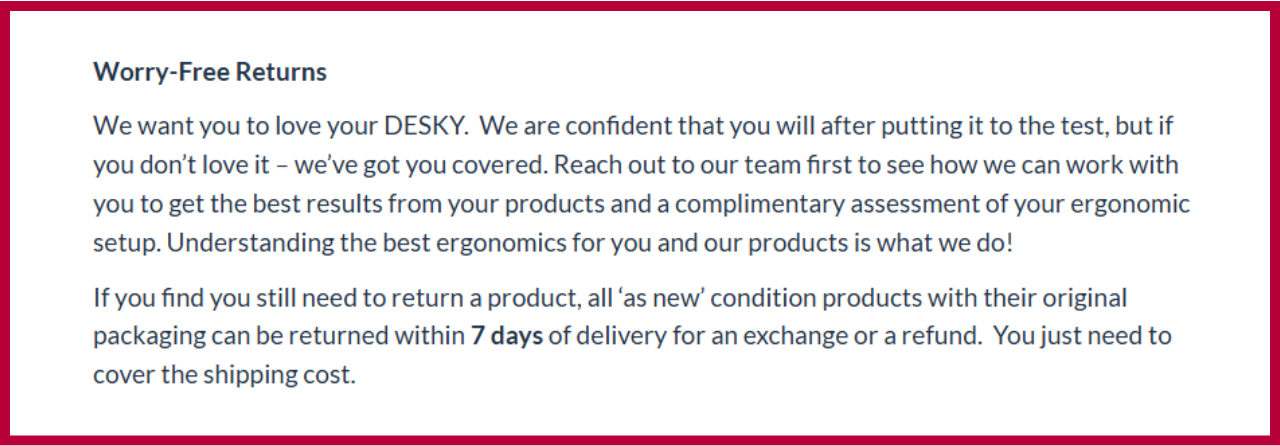
The return policy is one area where I give the UpDown PRO a clear advantage over the Desky Dual. While UpDown offers a generous 100-day trial, Desky gives you just seven days from delivery to request a return. That's a significant difference, particularly if you're buying your first standing desk and want enough time to decide whether it suits your daily routine.
The conditions make UpDown's offer even more attractive. Under Desky's return policy, the desk must be returned in as-new condition, fully disassembled and in its original packaging. You'll also have to cover return shipping and pay a 15% restocking fee for change-of-mind returns. UpDown has similar packaging requirements, but allows returns after normal installation without charging a restocking fee. For me, that makes its 100-day trial considerably more useful.
When it comes to warranty coverage, however, I found little to separate the two manufacturers. Both offer a 10-year warranty on their standing desk frames, with UpDown explicitly stating in its warranty policy that:
"PRO+ Desk Frames come with a 10 year warranty which covers the desk frame and all electrical components."
Desky's warranty policy similarly covers manufacturing defects, with the company explaining how it handles approved claims:
"we will determine whether a repair, replacement part or replacement product is provided"
Both manufacturers also offer five-year warranties on their standard desktops. So while I rate their warranty coverage highly, when I factor in the return conditions, UpDown remains the better choice for buyers who want more time to test their investment before committing.

Desky Dual features four programmable height presets, making it easy to switch between your preferred sitting and standing positions.
Its upgraded control panel also includes an OLED display, an 18W USB-C charging port and Bluetooth connectivity through the Desky app, where you can save six additional height presets, track your sitting and standing activity, and control the desk remotely. I particularly like the integration with Siri and Google Assistant, which adds hands-free voice control to an already well-equipped system.
UpDown has largely closed the gap with its newer PRO+ controller, which also features four memory presets, an OLED display, USB-C charging and Bluetooth app control. The difference, for me, is the user experience. Desky's controller feels more refined, with a cleaner interface and additional customisation options that give it a slight edge over UpDown in this area.
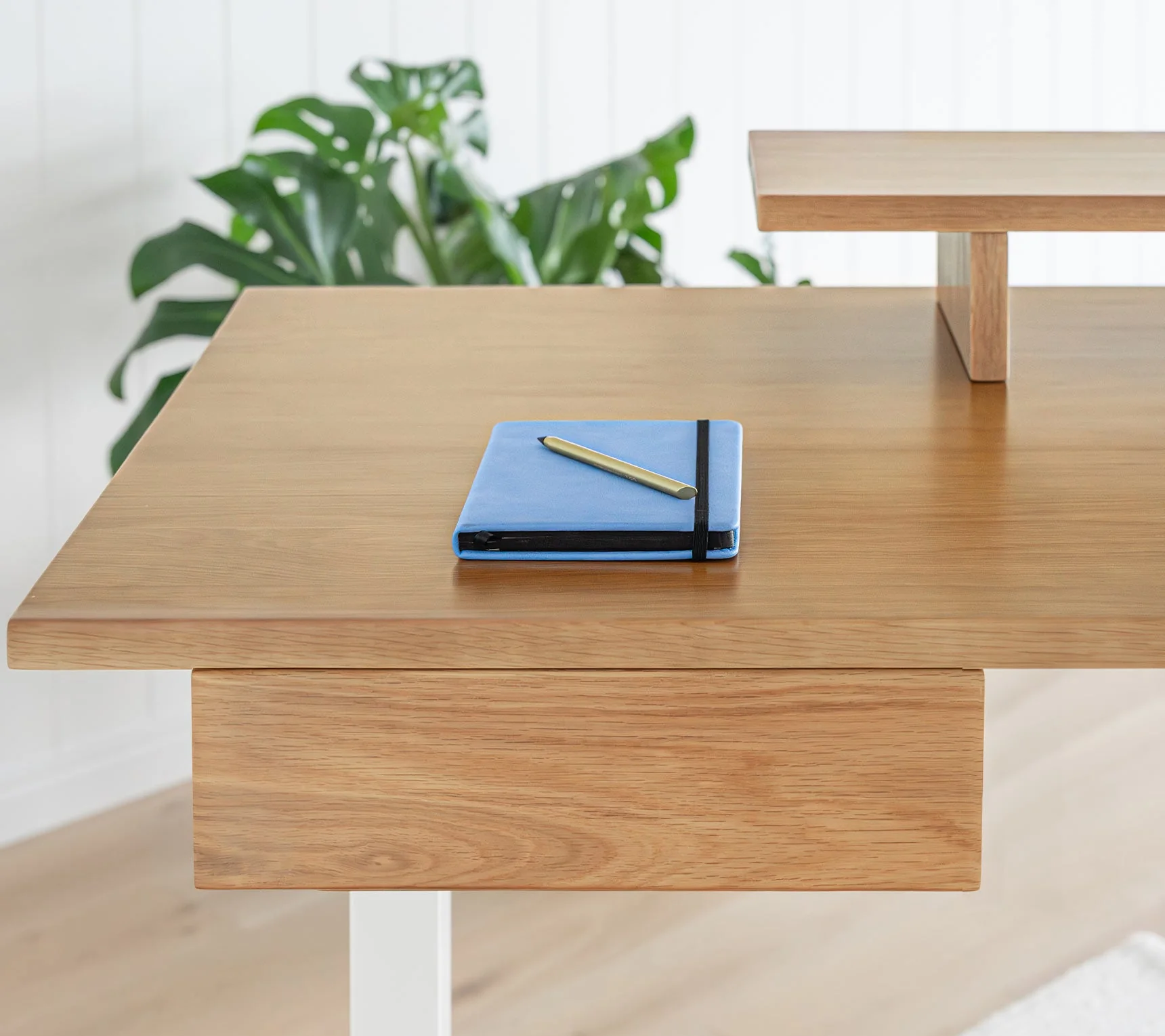
Beyond its upgraded controller, the Desky Dual includes several safety and efficiency features that make it well suited to everyday use:
- Overload protection to protect the lifting system from excessive weight.
- 200W transformer with a low standby power consumption of just 0.1W.
- Quiet operation, with a rated noise level of 40 dB during height adjustments.
- Adjustable anti-collision detection that stops the desk when it encounters an obstacle.
- Child lock to prevent accidental height adjustments, particularly useful in home offices.
For additional storage, Desky offers Minimal and Ultra Slim under-desk drawers as optional accessories. Both designs provide storage without taking up valuable desktop space or requiring a separate filing cabinet. They mount neatly beneath the desk, keeping everyday essentials within easy reach.
The Verdict

Desky Dual's extensive range of desktop materials and finishes, solid build quality, competitive pricing and well-designed cable management system make it one of my top recommendations for most buyers. I like its optional scalloped desktop, refined control panel and thoughtful safety features, which add to its practicality without compromising the overall design.
Compared with the UpDown PRO, the differences are relatively minor. Both desks now support up to 150 kg and offer comparable lifting performance, stability and customisation options. The biggest drawback for Desky is its seven-day return policy, which falls well short of UpDown's generous 100-day trial.
See how it ranked with the others in the table below:
| Category | Rating (5.0) |
|---|---|
| Build Quality | 4.7 |
| Ergonomics | 4.8 |
| Aesthetics | 4.6 |
| Cable Management | 4.4 |
| Customisability | 4.8 |
| Weight Capacity | 5.0 |
| Lifting Speed | 4.3 |
| Ease of Assembly | 4.3 |
| Value for Money | 4.5 |
| Return Policy | 2.0 |
| Warranty & Support | 5.0 |
| Overall | 4.6 |
Cost of Desky Dual Desk
The Desky Dual Mini starts at around $765, while the standard Desky Dual with a melamine desktop starts at $929. Larger hardwood configurations and optional accessories push the price beyond $2,000, putting Desky in a similar price range to the UpDown PRO.
3. Stand Desk Pro
Fastest Lifting Desk
Adjustable height: 64 - 128 cm
Desktop sizes: Up to 180 × 80 cm
Lifting speed: 80 mm/s
The Stand Desk PRO takes a simpler approach than the UpDown PRO and Desky Dual, with fewer desktop options and a more straightforward product range. That doesn't come at the expense of build quality, though. Having tested the desk myself, I found it sturdy, reliable and well suited to everyday use.
When I first reviewed Stand Desk, its range consisted of three models: the PRO, Essential and Entry, available with bamboo, birch plywood and hardwood desktops. The company has since introduced its V2 range, which focuses on the PRO V2 and Essential V2, with four desktop materials: melamine, bamboo, solid oak and solid walnut.
While the selection remains more limited than those of UpDown and Desky, I appreciate how straightforward it is to choose a configuration without sorting through dozens of finishes.
My first impression of the Stand Desk PRO was its packaging, which was noticeably simpler than what I'd seen with other desks. Instead of covering the desktop edges with protective foam, Stand Desk uses reinforced cardboard, reserving foam for the corners. The components also arrive in biodegradable bags, with the desktop protected by a cornstarch-based sleeve.
The packaging didn't feel particularly premium, but I appreciated the effort to reduce unnecessary plastic and foam. According to Stand Desk, 98% of its packaging is recyclable or biodegradable, and having unpacked one of these desks myself, I think it's a sensible approach.
Beyond the packaging, I was impressed by the desk's sturdy frame and overall construction. The model I originally reviewed offered a height adjustment range of 64–128 cm, putting it close to the UpDown PRO and providing plenty of flexibility for sitting and standing throughout the day.
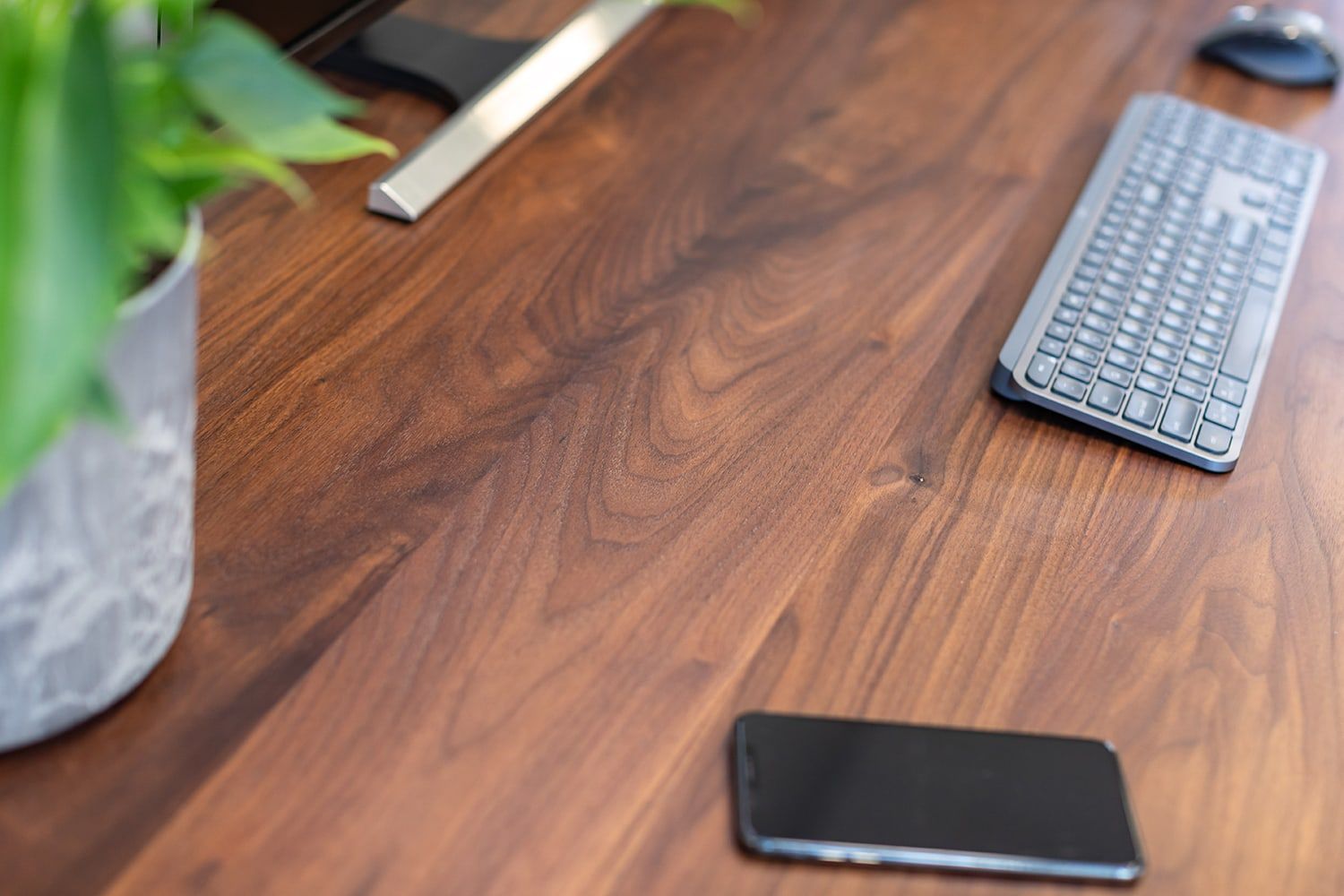
The Stand Desk PRO I tested came with three desktop material options: bamboo, birch plywood and solid hardwood. When I asked Stand Desk about these choices, its support team explained that each was selected for its durability and environmental credentials:
- Bamboo is fast-growing and natural
- Birch plywood is strong and eco-friendly
- Solid walnut and oak options are long-lasting
I tested the bamboo desktop before upgrading to solid walnut, which gave me a good opportunity to compare the two finishes firsthand. Bamboo was the most affordable option in the original range, and I rate it as a practical choice for buyers who want a natural desktop without paying hardwood prices.
The walnut desktop was a noticeable upgrade in appearance and feel, bringing the Stand Desk PRO closer to the premium hardwood options I've tested from UpDown and Desky. I still rank UpDown first for overall build quality, followed closely by Desky and Stand Desk.
The Stand Desk PRO's dual-motor lifting system is one of its strongest features, and I was impressed by how quickly and smoothly it moves between sitting and standing positions. At 80 mm per second, it's the fastest desk I've tested, with the newer PRO V2 retaining that speed while increasing its weight capacity from 120 kg to 150 kg.
To put that speed into perspective, the Stand Desk PRO takes approximately eight seconds to travel through its full height range. By comparison, the Desky Dual and UpDown PRO take roughly 16–18 seconds to cover a similar distance. That's a noticeable difference in everyday use and one area where Stand Desk clearly outperforms its more expensive competitors.
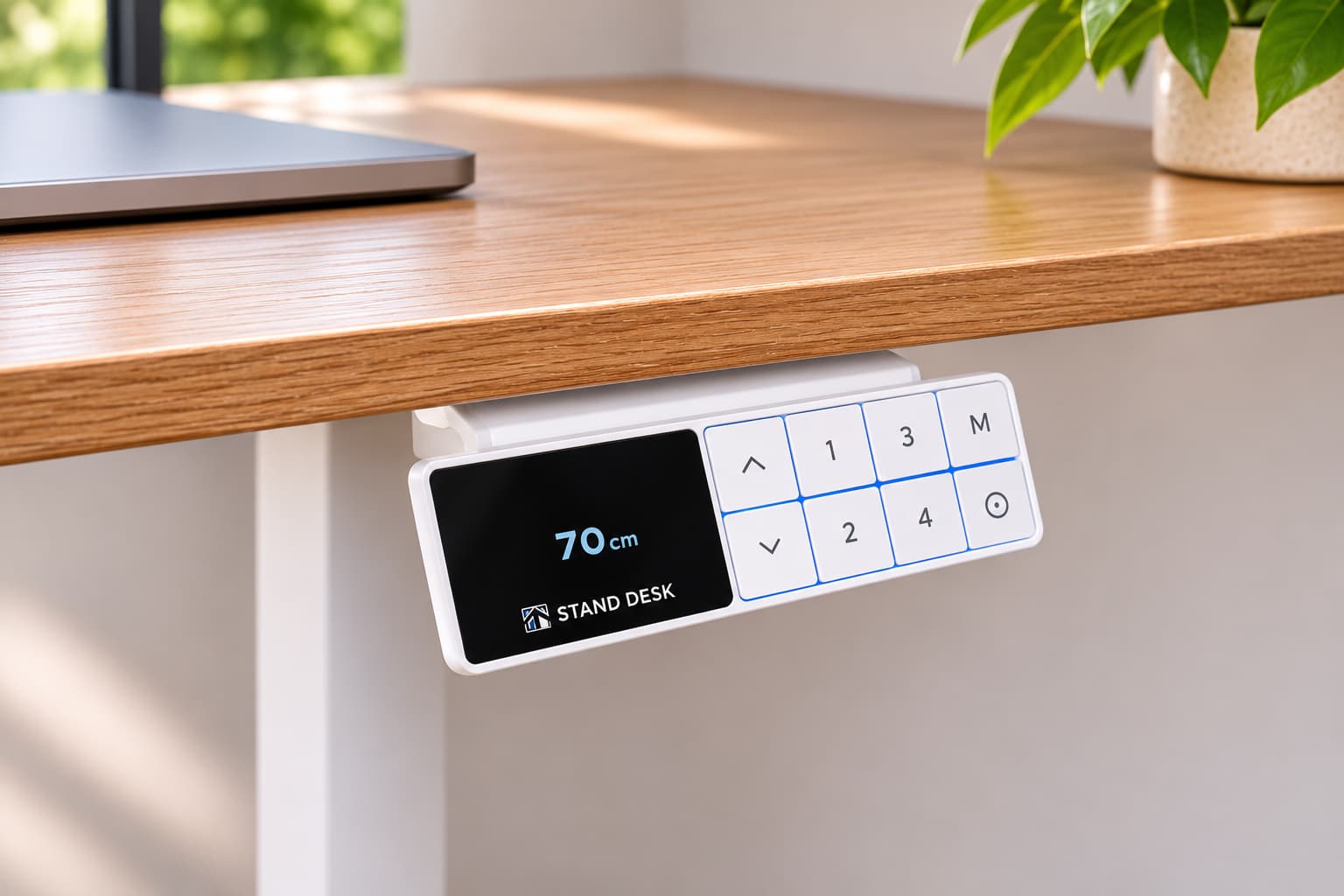
Still on controls, the Stand Desk PRO's control panel is straightforward to use, with two programmable height presets to switch between sitting and standing positions at the press of a button. It also connects to the Stand Desk app via Bluetooth for more control through customised sitting and standing schedules, reminders and voice commands using Siri or Google Assistant.
Like UpDown, Stand Desk has since upgraded the controller on its PRO V2 model, increasing the number of programmable height presets to four and adding built-in sit-stand reminders, adjustable backlighting and a child lock.
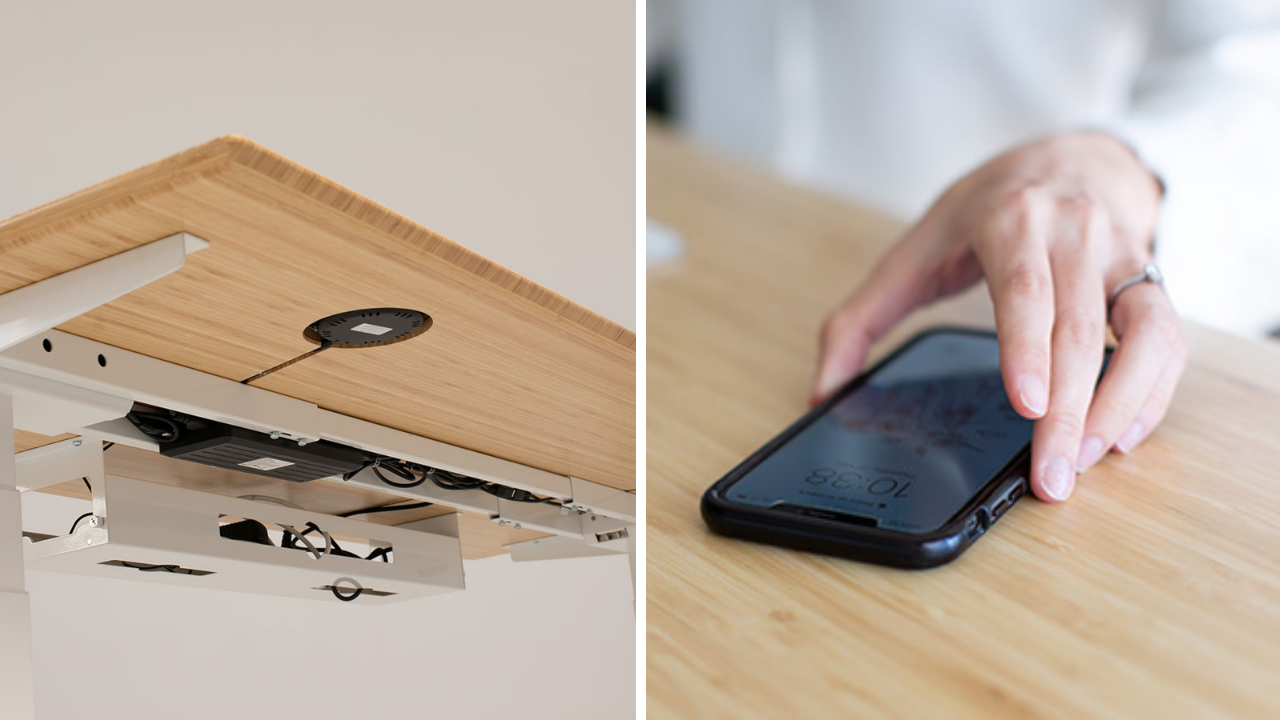
Unlike Desky and UpDown, which feature USB charging ports on their controllers, the Stand Desk PRO I tested uses a built-in 10W wireless charger positioned beneath the desktop. It charges compatible devices through a designated area on the desk surface, eliminating the need for a charging cable.
During my testing, however, charging was inconsistent. I frequently had to reposition my phone to establish a connection, and on some occasions, charging failed to start altogether. The advertised 10W is also the charger's maximum rated output, not a guaranteed charging speed.
Stand Desk now sells the wireless charger as a $99 optional accessory for its newer PRO V2 range, rather than including it as standard. It's also incompatible with melamine desktops, so I'd check desktop compatibility before adding it to an order if you fancy the feature.

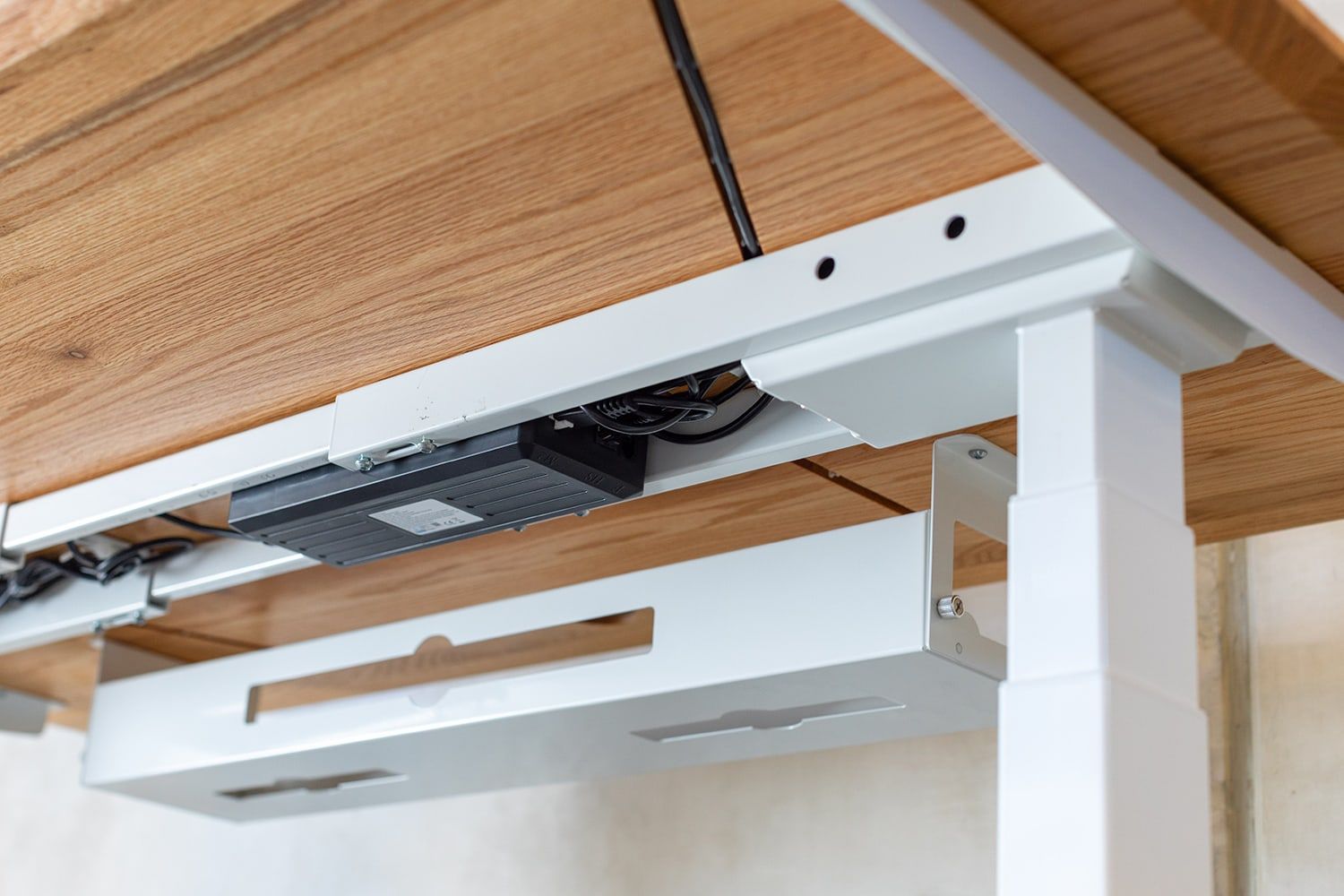
Cable management is another area where the Stand Desk PRO performs well. It ships with an integrated cable management tray and two large grommet holes at the rear of the desktop, all included in the purchase price.
The tray provides enough room to keep power boards, adapters and excess cables out of sight, while the grommets allow cables to pass neatly through the desktop. UpDown now includes a standard cable tray with its desks, although its integrated system costs extra. Similarly, Desky charges separately for its integrated cable and power channel.
For the cleanest setup, I recommend placing a surge-protected power board inside the cable tray and connecting your monitor, computer and other desk accessories to it. This leaves just one power cable running from the desk to the wall outlet, reducing clutter around the legs. And make sure the cable has enough slack to accommodate the desk's full height adjustment range without pulling on the socket.
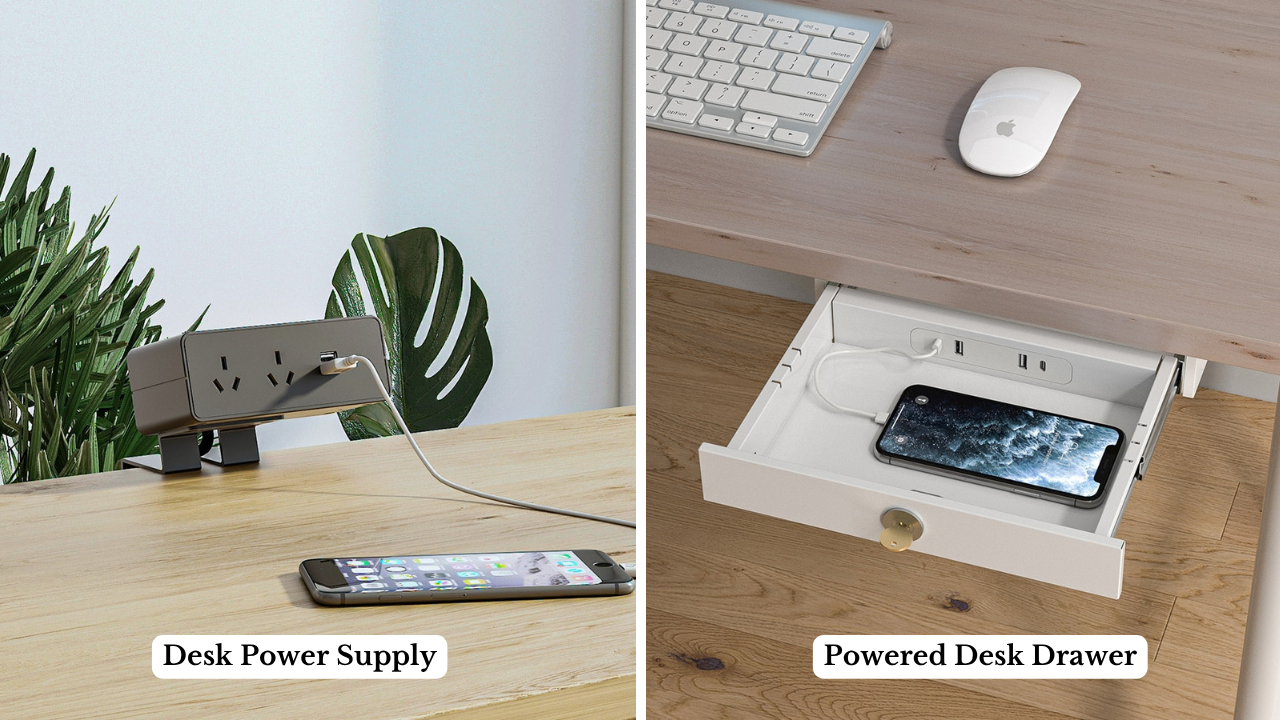
Beyond the cable management tray, Stand Desk offers an On-Desk Power Supply that clamps to the desktop, giving you two Australian power outlets and two USB-A fast-charging ports.
Another useful accessory is the Powered Desk Drawer, which combines lockable under-desk storage with two USB-A and two USB-C charging ports. Its compact 24.5 × 18 × 4 cm interior provides space for smaller essentials without taking up room on the desktop. However, the drawer is currently out of stock, so I wouldn't factor it into a new purchase until Stand Desk restocks it.
If you don’t want anything sitting on the desktop, you can skip both accessories and rely on the built-in cable tray. With a good power board inside the tray, most people won’t need extra charging points, anyway.

Beyond its lifting performance and smart controls, the Stand Desk PRO includes several safety features I've come to expect from a premium standing desk:
- Child lock protection to prevent accidental height adjustments.
- Anti-collision detection that stops the desk when it encounters an obstacle.
- Quiet operation, with a manufacturer-rated noise level below 45 dB during height adjustments.
Equally important are Stand Desk's 100-day trial and 10-year warranty, both of which I consider strong reasons to choose it over competing models. The trial matches UpDown's 100-day offer, with the added advantage of free return shipping and a full refund for single-desk purchases. However, Stand Desk makes it clear in its return policy that:
"The products cannot be damaged and must be returned in the original packaging materials."
You'll also need to disassemble the desk and repack it as it arrived. I recommend keeping the original packaging throughout the trial period, particularly if you're unsure whether you'll keep the desk.
The 10-year warranty is another strong point, covering the entire desk rather than just its frame. Stand Desk explicitly states:
"This includes all parts and components of the Stand Desk desks."
To make a warranty claim, you'll need to contact Stand Desk with your order number and details of the fault. I recommend keeping your purchase confirmation accessible throughout the warranty period, as the company uses it to process claims and arrange replacement parts.
Final Verdict
While the Stand Desk PRO has a few drawbacks, particularly the inconsistent wireless charging I experienced during testing, its strengths comfortably outweigh them. The newer PRO V2 also addresses the original model's 120 kg weight limit, increasing its lifting capacity to 150 kg.
Combined with its fast height adjustments, sturdy construction, generous warranty and 100-day trial, I consider it a strong alternative to the UpDown PRO and Desky Dual. Here's how it compares to the competition:
| Category | Rating (5.0) |
|---|---|
| Build Quality | 4.6 |
| Ergonomics | 4.7 |
| Aesthetics | 4.2 |
| Cable Management | 4.7 |
| Customisability | 4.3 |
| Weight Capacity | 5.0 |
| Lifting Speed | 5.0 |
| Ease of Assembly | 4.5 |
| Value for Money | 4.6 |
| Return Policy | 5.0 |
| Warranty & Support | 5.0 |
| Overall | 4.7 |
For the top three standing desks, I rank the UpDown PRO highest for its overall build quality, stability and finish.
The Desky Dual comes a close second, offering comparable construction, extensive customisation and good value for money. The Stand Desk PRO takes third place. It has clear advantages over both competitors, particularly its faster height adjustments, focus on sustainable materials and generous 100-day return policy.
I rate its overall finish and build quality slightly below UpDown and Desky Pro desks. Still, it's an excellent alternative for buyers who prioritise lifting speed and sustainability over extensive customisation.
Cost of the Stand Desk Pro
The Stand Desk PRO competes directly with the Desky Dual, although its newer PRO V2 currently starts at a lower promotional price of A$749, compared with A$929 for the Desky Dual Melamine.
It's an excellent value for its fast dual-motor lifting system, solid construction, sustainable packaging and included cable management tray. The 10-year warranty and 100-day trial, with free return shipping for single-desk purchases, further strengthen its appeal.
4. Artiss Standing Desk
Best Cheap Sit-Stand Desk

Adjustable height : 70 - 120 cm
Desktop sizes: Up to 140 × 70 cm
Lifting speed: 32 mm/s
The Artiss Sit-Stand Desk is my budget pick for buyers who want an electric height-adjustable desk. Artiss offers a broad range of models, with the main differences coming down to motor configuration, lifting capacity, adjustment speed and control panel features.
At the lower end, single-motor models start at around A$290, with basic configurations supporting 60–70 kg and adjusting at 25 mm/s. Some include two programmable height presets, making it easy to switch between sitting and standing without manually adjusting the height each time.
For heavier setups, I'd recommend looking at Artiss's dual-motor range, with complete desks available from around A$380. Its standard dual-motor frame supports 100 kg, adjusts at 32 mm/s and includes three programmable height presets and a sit-stand reminder.

Despite their differences in motor performance and lifting capacity, the Artiss single- and dual-motor standing desks share several practical features:
- Both desks have a motorised, height-adjustable frame.
- Both have a high-quality, powder-coated metal frame.
- Both offer stepless height adjustments.
- The desktops for both options ship with pre-drilled holes and an anti-scratch finish with smooth edges and surfaces.
These are useful features at Artiss's price point, particularly for buyers who want a basic electric standing desk. However, I wouldn't put Artiss in the same category as the UpDown PRO, Desky Dual or Stand Desk PRO.
Its lower lifting capacities, more basic controls and shorter warranty make it better suited to budget-conscious buyers than those looking for a premium desk for long-term use.

Build quality is where the Artiss Standing Desk begins to show its budget positioning. Unlike the premium hardwood options from UpDown and Desky, Artiss uses particleboard, an engineered wood made from compressed wood particles, to keep manufacturing costs down.
The desktops come in several finishes, including walnut, oak, rustic brown, white and black, giving buyers a reasonable choice of colours without the higher cost of solid timber. However, the walnut and oak finishes are decorative surfaces rather than genuine hardwood, which is an important distinction if you're buying a desk for long-term use.
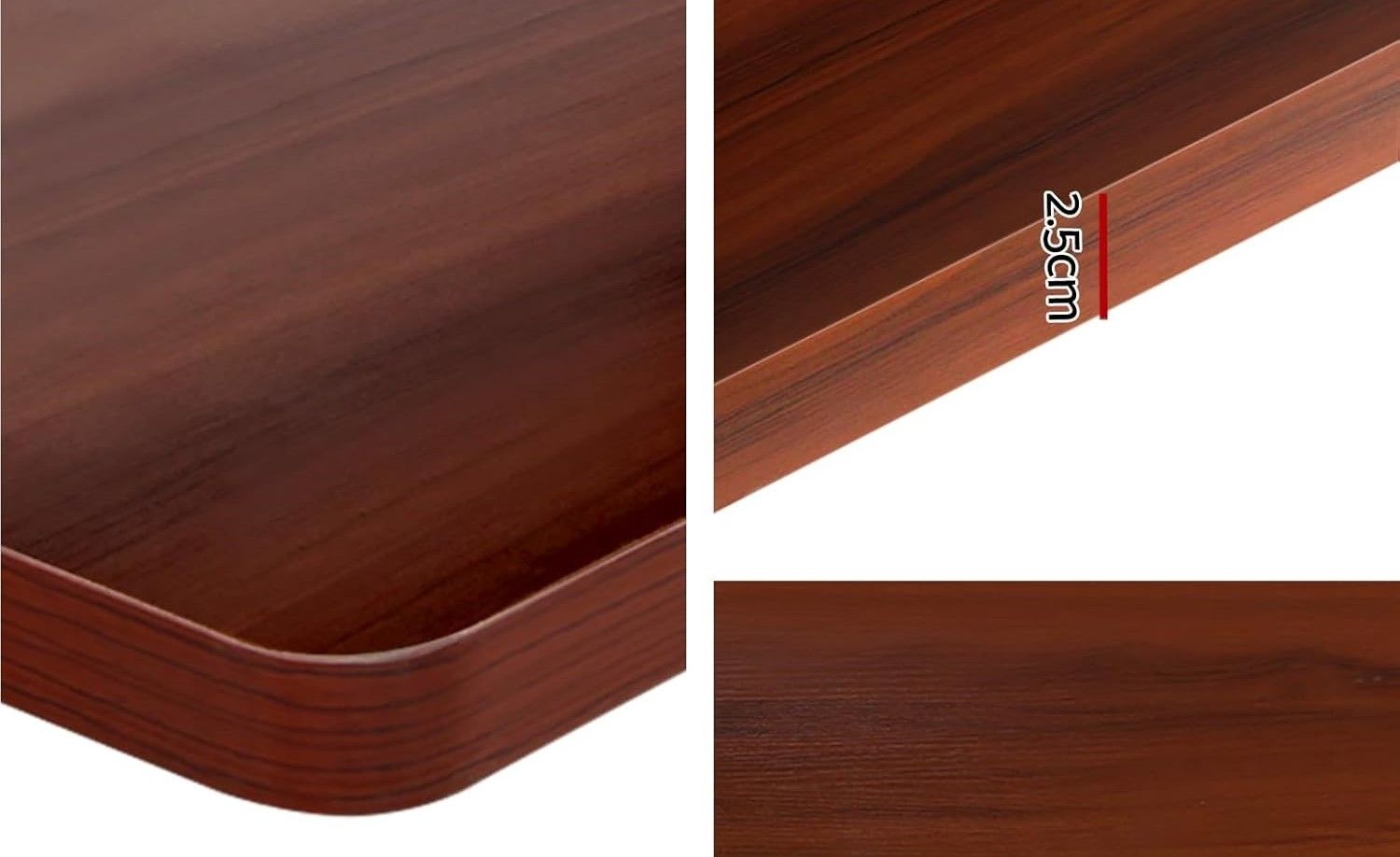
Despite its budget price, I found the Artiss desktop surprisingly well finished. At 2.5 cm thick, it feels substantial, while the smooth edges, rounded corners and scratch-resistant surface give it a more refined appearance than I expected from an entry-level desk. The powder-coated steel frame also provides a sturdy foundation, albeit not the same level as premium desks.
More on the upside, I appreciate the adjustable frame width, which allows you to replace the desktop without buying an entirely new desk. Depending on the model, Artiss frames accommodate desktops between 100 and 160 cm wide, giving you the flexibility to move to a smaller workspace or upgrade to a larger surface as your needs change.
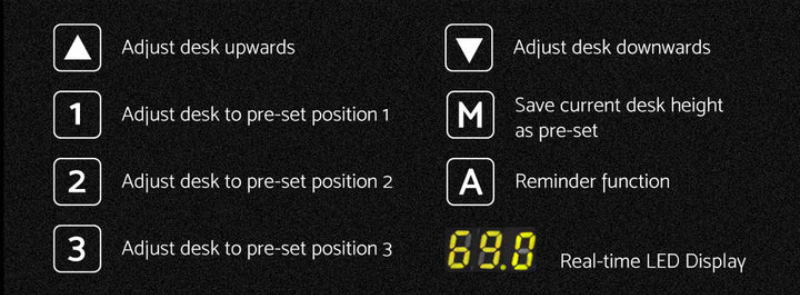
The Artiss control panel is basic compared with those on the three premium standing desks I've reviewed, but it handles everyday height adjustments well. Depending on the model, you get two or three programmable height presets, allowing you to save your preferred sitting and standing positions. I also found the buttons responsive with a satisfying tactile feel.
What you don't get on the standard single- and dual-motor models is the convenience of USB charging or Bluetooth app control found on more expensive desks. I don't consider either essential, particularly for a budget standing desk, and the Artiss controller delivers the functionality most buyers need without unnecessary complexity.
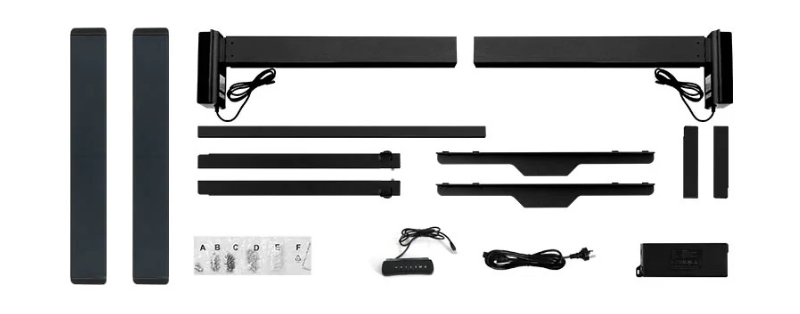
Cable management is another area Artiss falls behind. It includes a few clips and cable ties for a basic setup, but is less practical when working with multiple monitors and other accessories. To improve things, I installed the UpDown cable tray beneath the Artiss desktop, and it fitted without any issues. Desky's cable tray is another option worth considering.
The biggest drawback? Artiss's warranty and return policy. Most of its standard standing desks come with just a one-year manufacturer's warranty, compared with the 10-year warranties offered by my top three picks.
Artiss also has a 30-day change-of-mind return policy, but it's important to understand the conditions before buying. As the manufacturer states in its official return policy:
"You have the option to return at your cost any unopened, unused Artiss Product in its original packaging"
This means you can't assemble and test the desk before deciding to return it for a change of mind. You'll also pay return shipping and a restocking fee of up to 15%, making the policy considerably less generous than the 100-day trials offered by UpDown and Stand Desk. For me, that's an important compromise to consider alongside Artiss's lower purchase price.
The Verdict

While the Artiss Standing Desk looks and feels better than its price suggests, I wouldn't mistake it for a premium model like the UpDown PRO. The difference is apparent in the desktop materials, overall finish and attention to detail, particularly if you're furnishing a high-end home office.
For its price, however, I still consider Artiss the best budget standing desk in Australia. It delivers reliable height adjustment, decent build quality and the essential features most people need without the premium price tag. It continues to offer the strongest value for buyers on a tight budget. Here's how it scores across my key review criteria.
| Category | Rating (5.0) |
|---|---|
| Build Quality | 3.5 |
| Ergonomics | 3.6 |
| Aesthetics | 3.8 |
| Cable Management | 3.0 |
| Customisability | 3.2 |
| Weight Capacity | 3.7 |
| Lifting Speed | 4.0 |
| Ease of Assembly | 3.5 |
| Value for Money | 4.8 |
| Return Policy | 1.5 |
| Warranty & Support | 2.0 |
| Overall | 3.4 |
Cost of the Artiss Desk
I've found that the Artiss Sit-Stand Desk is generally cheaper through third-party retailers than on the manufacturer's website, with some models available at substantial discounts. Prices vary depending on the desk configuration, retailer and current promotions, so I recommend comparing offers before buying. Use the button below to check the latest deals.
5. Secretlab Magnus Pro/Pro XL
Best Standing Desk for Gamers
Adjustable height: 65 - 125 cm
Frame weight: 25.5 kg
Lifting speed: 30 mm/s
For gaming setups, my top recommendation is the Secretlab MAGNUS Pro and MAGNUS Pro XL. Unlike conventional standing desks, both are designed specifically for gaming, combining electric height adjustment with a full-length cable management tray, an integrated power supply and a range of purpose-built accessories for keeping monitors, cables and peripherals organised.
Secretlab offers the desk in two sizes. The standard MAGNUS Pro measures 150 × 70 cm, providing enough space for most single- and dual-monitor gaming setups. For larger configurations, I'd choose the MAGNUS Pro XL, which measures 177 × 80 cm and offers 18% more desktop space.
The additional width and depth make it a better fit for ultrawide monitors, multiple displays and setups with several gaming peripherals.
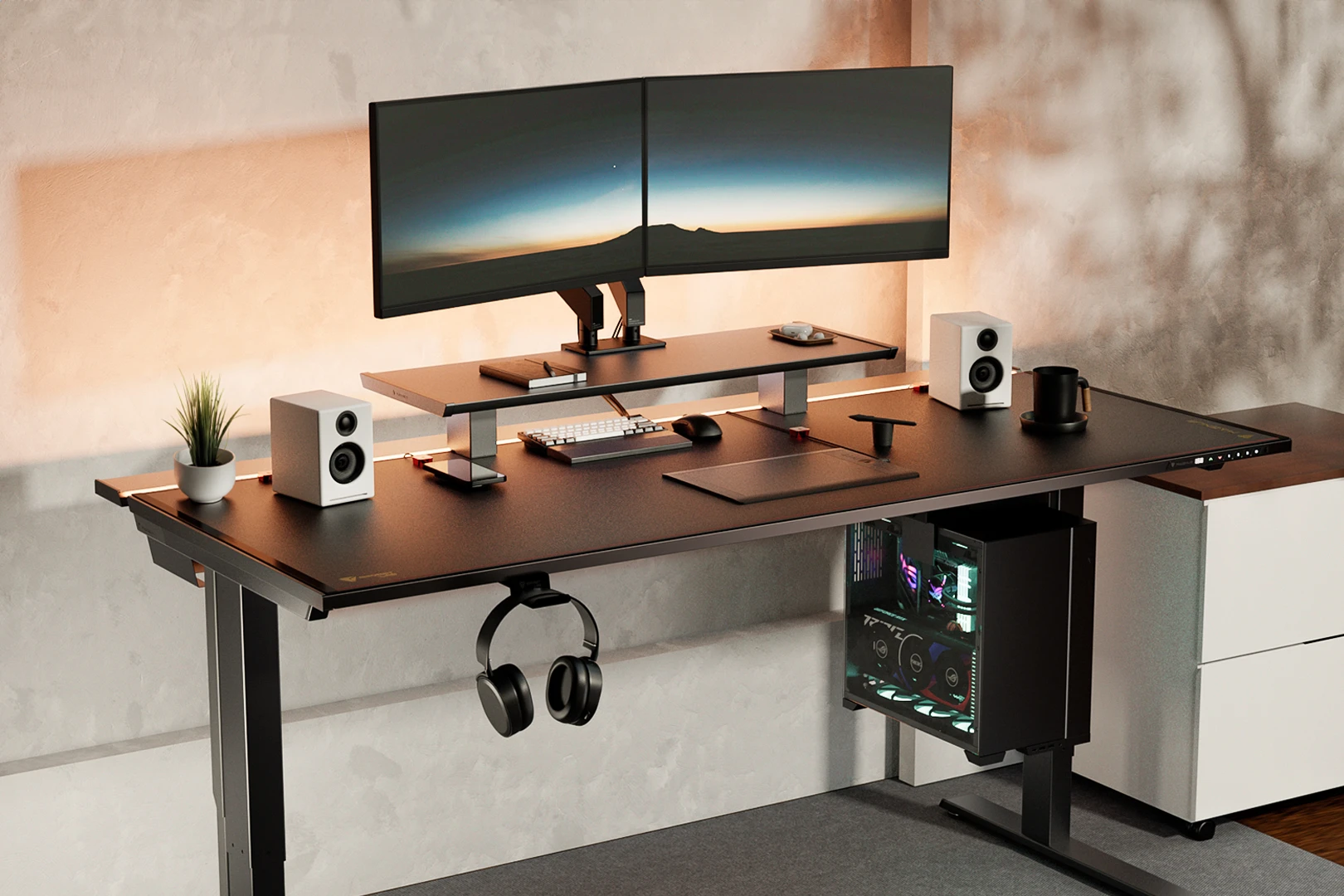
Build quality is one of the MAGNUS Pro's strongest features, although its construction differs considerably from the other standing desks I've reviewed. Secretlab uses a heavy-duty steel frame and a powder-coated metal desktop with an MDF core reinforced by steel and aluminium. The result is a rigid, substantial work surface that also supports Secretlab's magnetic accessories, including cable anchors, headphone hangers and cable sheaths.
Compared with the hardwood desktops offered by UpDown and Desky, the MAGNUS Pro takes a more practical approach to materials. While I prefer the natural grain and finish of solid timber for a traditional home office, the metal surface makes more sense for a gaming setup, particularly when organising multiple monitors, peripherals and cables.
Its powder-coated finish provides a uniform appearance, although it isn't immune to scratches, and the MDF core still needs protection from moisture. I consider the biggest advantage to be the combination of sturdy construction and compatibility with Secretlab's magnetic accessory system.

The MAGNUS Pro uses a dual-motor lifting system with a maximum distributed load capacity of 120 kg, including the weight of the desktop. This is an important distinction, as the standard desktop weighs 25.5 kg, while the XL weighs 32.9 kg, leaving less capacity for monitors, computers and other equipment.
Both models adjust between 65 and 125 cm at 30 mm/s, making them slower than most of the premium standing desks I've reviewed. For height adjustments, Secretlab integrates a backlit, touch-sensitive control panel directly into the front edge of the desktop rather than mounting a separate controller underneath.
It displays the current desk height and includes three programmable presets for saving your preferred positions. I also like the dedicated on/off switch, which prevents accidental adjustments, alongside the anti-collision system that automatically stops the desk when it encounters an obstacle.

Cable management is one of the MAGNUS Pro's biggest advantages over the other standing desks I've reviewed. Secretlab includes a full-length cable management tray as standard, running across the entire rear edge of the desktop.
It's spacious enough to accommodate a power board, adapters and cables from multiple monitors and gaming peripherals, with a hinged rear cover that provides easy access from above. The desk also features an integrated power supply column, allowing you to power the desk and connected devices through a single cable running to the wall outlet.
For me, cable management and the extensive range of compatible accessories are the two areas where the MAGNUS Pro stands out most. While UpDown, Desky and Stand Desk offer capable cable management solutions, Secretlab's integrated power system and purpose-built accessories provide a more complete solution for complex gaming setups.
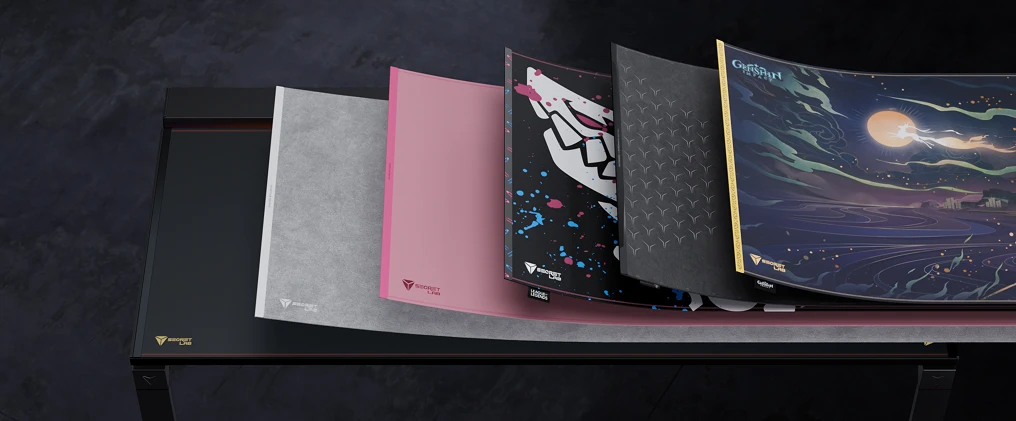
Secretlab offers a wide range of optional add-ons. These include single and dual monitor arms, a high-end PC mount, a magnetic headphone hanger, a LAN cable extension, magnetic cable sheaths and anchors, fastening straps, and a complete cable management bundle.
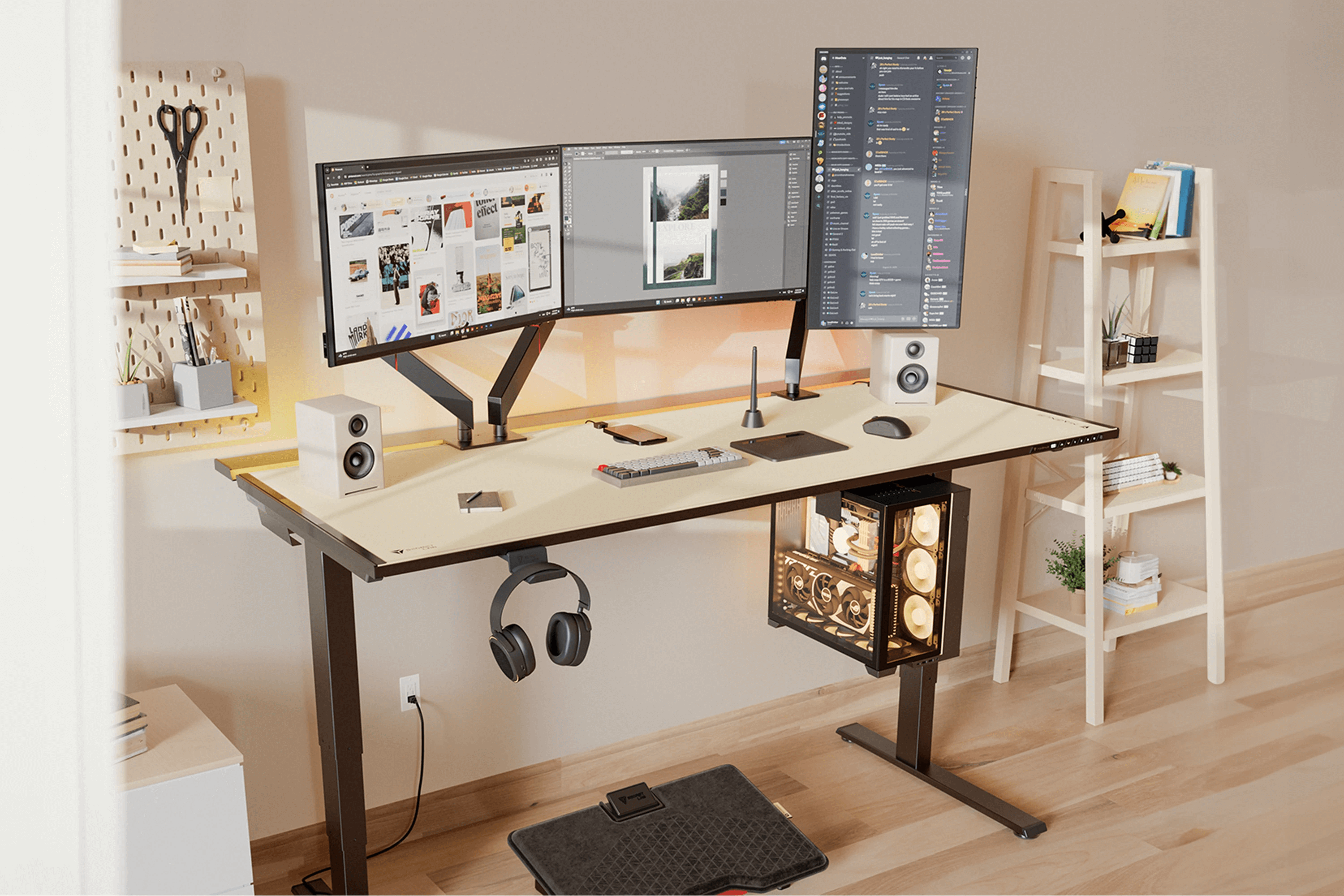
Personalising your desk is even easier with the MAGPAD system, which offers 14 different desk mats to choose from. This also means you can replace your desktop mat if it is worn out. The gaming desk supports a multi-colour magnetic LED lighting system for an immersive ambience.

The final area I considered is Secretlab's warranty and return policy, where the MAGNUS Pro falls behind the premium office standing desks I've reviewed. Secretlab provides a five-year warranty on the desk's main components, but the electronic control panel and electrical control box are covered for just two years. Accessories have separate warranties, ranging from six months to three years, depending on the product.
Secretlab also offers a 49-day return period, giving you time to assemble and test the desk before deciding whether to keep it. That's more generous than Desky's seven-day policy, although it falls short of the 100-day trials offered by UpDown and Stand Desk. The main drawback is the cost of returning such a heavy desk. As Secretlab states in its Australian return policy:
"You must pay the shipping cost of returning the goods"
The desk must be completely disassembled and returned in its original packaging. Secretlab warns that damage fees, potentially up to the product's purchase price, apply if items are returned damaged or with missing parts.
The policy also states that it "only applies to consumer purchases", meaning business purchases aren't covered by the standard change-of-mind return offer. This doesn't mean the policy is restricted to single-desk purchases, though. I recommend reading the warranty and return conditions.
Secretlab Magnus Pro Rating
Secretlab isn't the only brand offering gaming standing desks in Australia. UpDown, Desky and Artiss have all introduced gaming-focused models, with features such as RGB lighting, monitor arms, cable management systems and dedicated accessories.
The difference is most apparent in its integrated power supply column, full-length cable management tray and magnetic accessory system. While the competing brands offer many of these features individually, Secretlab brings them together in a more cohesive design that makes organising multiple monitors, peripherals and cables considerably easier.
I compared the Secretlab Magnus Pro (not the Pro XL) to other standing desks on my list. Here's how it fared:
| Category | Rating (5.0) |
|---|---|
| Build Quality | 4.4 |
| Ergonomics | 4.2 |
| Aesthetics | 4.6 |
| Cable Management | 5.0 |
| Customisability | 5.0 |
| Weight Capacity | 4.0 |
| Lifting Speed | 3.9 |
| Ease of Assembly | 3.6 |
| Value for Money | 3.9 |
| Return Policy | 3.8 |
| Warranty & Support | 3.5 |
| Overall | 4.2 |
Secretlab has a niche, and the Magnus Pro fits it perfectly: a gaming-focused standing desk with excellent build quality, effective cable management, and a robust accessory ecosystem.
6. The 9am Robin PRO
Best for Minimalist Home Workstations

Adjustable height: 65 - 130 cm
Desktop sizes: Up to 160 × 70 cm
Lifting speed: 38 mm/s
The 9am Home Robin PRO has one of the slightly distinctive designs of any standing desk I've reviewed, with its triangular steel legs, rounded corners and clean, minimalist finish. At a starting price of A$819 on promotion, it competes more closely with premium models than entry-level options such as Artiss.
It's nice to see a manufacturer move away from the conventional standing desk design without compromising its core functionality. However, at this price, aesthetics alone aren't enough to justify a purchase. So, I'll compare its build quality, lifting performance, features and warranty with the premium desks I've already reviewed to see where it offers better value.

In terms of build quality, I rank the 9am Home Robin PRO closer to Artiss than premium desks like the UpDown PRO and Desky Dual. Its desktop uses melamine-faced chipboard rather than solid hardwood, so you lose the natural grain, substantial feel and ability to refinish the surface as it ages.
Although both Artiss and the Robin PRO use engineered-wood desktops, I find the Robin PRO considerably better designed. Its triangular steel legs and rounded desktop corners give it a more refined appearance that suits minimalist home offices. However, the desktop is still melamine-faced chipboard rather than solid hardwood, which I consider a drawback at this price.

The Robin PRO has a lifting capacity of 125 kg, putting it ahead of the standard Artiss dual-motor desk (100 kg) and Secretlab MAGNUS Pro (120 kg). However, it falls behind the newer Stand Desk PRO V2, which now supports 150 kg. Its dual-motor system adjusts at 38 mm/s, a respectable speed that puts it close to the UpDown PRO+ at 40 mm/s.
I also rate the Robin PRO's control panel highly for its straightforward layout and ease of use. It features an OLED display, two programmable height presets, a sit-stand reminder and clearly labelled adjustment buttons. While it lacks the USB charging and Bluetooth connectivity offered by more expensive models, I found the controls practical and easy to navigate.
You get a height adjustment range of 65–130 cm, one of the highest maximum settings among the desks I've reviewed. By comparison, the UpDown PRO+ reaches 129 cm, and the Desky Dual reaches 125 cm. That extra height is worth considering if you're taller and need a higher standing position.

The Robin PRO ships with an integrated cable management tray, which comes included with the desk, just like the Secretlab MAGNUS, Stand Desk PRO, and the UpDown, which now supply a free standard cable tray and cable management kit with their standing desks.
For add-ons or accessories, 9am Home offers monitor arms and risers, leg covers and privacy boards, desk clamp power boards (which I recommend to complement the cable tray), and desk storage and mats.
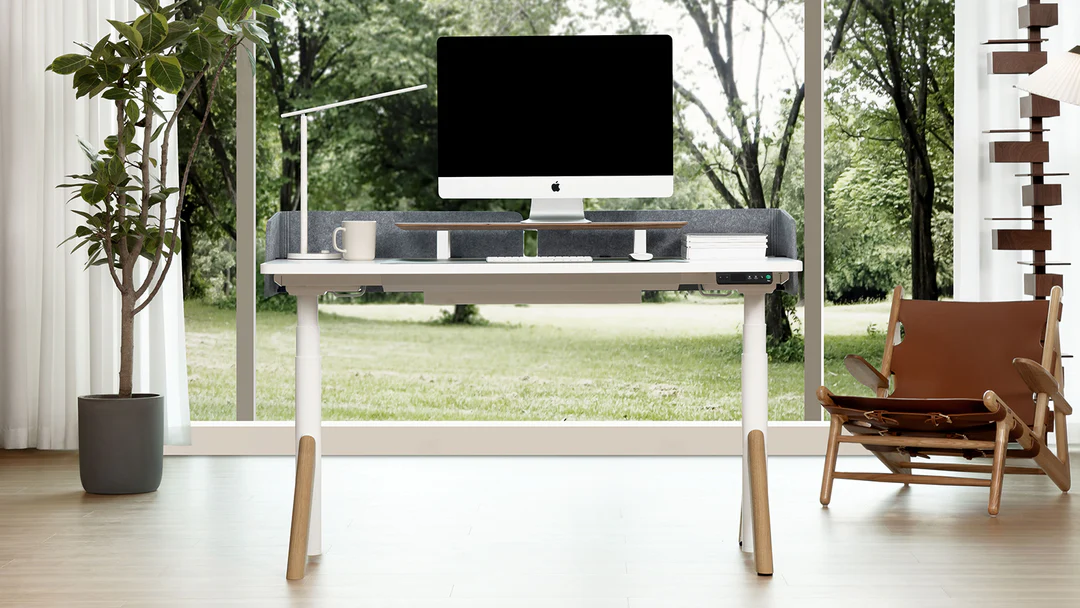
The Robin PRO also includes several features I'd expect from a premium standing desk, including dual motors, a child lock, anti-collision protection and an integrated cable management tray. Assembly is another advantage, with the desktop and frame largely preassembled and wired. 9am Home advertises a tool-free installation process that takes around five minutes, making it one of the easiest desks to set up in this roundup.
Warranty coverage is competitive, with 10 years on the frame and motors, five years on the desktop and three years on the controller, sensors and other electrical control components. I consider this reasonable protection for a desk at this price, although the shorter coverage for electronics is worth noting.
The return policy is less impressive. 9am Home offers 30 days, which is longer than Desky's seven-day return period but considerably shorter than the 100-day trials from UpDown and Stand Desk. More importantly, the manufacturer's return policy requires the desk to appear:
"brand new" with no signs of use, installation, or damage.
The desk must also be returned in its original packaging, with all stickers, receipts and tags intact. This effectively rules out assembling and testing the desk before requesting a change-of-mind return. You'll also have to cover return shipping, although 9am Home pays these costs when the wrong product is delivered or the desk arrives damaged or defective.
Finally, 9am Home doesn't accept change-of-mind returns for orders of three or more desks. I'd recommend buying a single unit first if you're considering the Robin PRO for a larger office fit-out.
Cost of the Robin PRO

The 9am Home Robin PRO currently starts at A$819 on promotion, down from A$899. Larger desktop sizes and optional accessories push the price beyond A$1,000, putting it firmly outside the budget category.
At this price, I consider it a better investment for buyers who prioritise minimalist design, easy assembly and a compact workstation over premium desktop materials. Here's how it compares:
| Category | Rating (5.0) |
|---|---|
| Build Quality | 3.9 |
| Ergonomics | 4.7 |
| Aesthetics | 4.7 |
| Cable Management | 4.5 |
| Customisability | 3.9 |
| Weight Capacity | 4.3 |
| Lifting Speed | 4.3 |
| Ease of Assembly | 4.8 |
| Value for Money | 4.1 |
| Return Policy | 2.0 |
| Warranty & Support | 4.4 |
| Overall | 4.2 |
9am Robin PRO is a well-built option for those favouring a minimalist design and premium features. Its unique build, steel frames, control panel, weight capacity, and warranty make it a worthwhile investment.
7. FlexiSpot E7
Best Budget Sit-Stand Desk Alternative

Adjustable height: 58 - 123 cm
Desktop sizes: Up to 182 × 76 cm
Lifting speed: 35 mm/s
The FlexiSpot E7 is a recent addition to my roundup of the best standing desks in Australia. It's not the first time I've come across it researching and testing sit-stand desks, but I've included it now for two reasons:
- The price dropped; more on this below.
- FlexiSpot now offers a 10-year Australian warranty covering the desk's frame, motors and electrical components, a significant improvement over its earlier five-year coverage.
Starting with build quality, the E7 has a sturdy carbon-steel frame with reinforced lifting columns and a powder-coated finish. Its construction is comparable to more expensive standing desks, making it an attractive option for buyers who want a heavy-duty frame without paying a premium price.

For desktop materials, FlexiSpot offers both engineered wood and natural alternatives, including particleboard, MDF, bamboo and solid rubberwood. Particleboard is the most affordable option, while rubberwood costs more and provides the natural grain and finish of solid timber.
I consider this variety one of the E7's advantages over budget desks such as Artiss, which primarily use engineered-wood desktops. While UpDown and Stand Desk PRO offer premium hardwood options, FlexiSpot gives buyers a choice between affordable engineered surfaces and natural materials at a lower starting price.
For buyers who want a solid timber desktop without spending as much as they would on an UpDown PRO, I'd recommend considering the rubberwood option.

The FlexiSpot E7 uses a dual-motor lifting system with smooth height adjustments and a digital control panel featuring four programmable height presets. The controller also includes a USB-A charging port and child lock, making it more functional than the basic controls on the standard Artiss models. While Bluetooth app connectivity is absent, FlexiSpot offers a sit-stand reminder on certain E7 controller configurations.
Performance is great as well. The desk adjusts between 58 and 123 cm, with a rated load capacity of up to 160 kg and a lifting speed of approximately 38 mm/s. That puts it ahead of the standard Artiss dual-motor desk, which supports 100 kg at 32 mm/s. The Stand Desk is considerably faster at 80 mm/s but supports slightly less weight at 150 kg, matching UpDown PRO's capacity.

Cable management is another area where I rate the FlexiSpot E7 ahead of the standard Artiss desk. The E7 includes an under-desk cable tray for organising power cables, adapters and excess wiring. For a more complete setup, FlexiSpot also sells additional cable management accessories, including larger trays, cable organisers and fastening clips.
FlexiSpot's accessory range extends beyond cable management, with monitor arms, monitor risers, storage solutions and under-desk drawers available separately. The E7 also includes two safety features I've come to expect from a well-equipped standing desk: a child lock that prevents accidental adjustments and an anti-collision system that stops and reverses the desk when it encounters an obstacle.
I found the FlexiSpot E7 straightforward to assemble, with clearly labelled components, well-aligned frame sections and instructions that were easy to follow. Allow around an hour for assembly, particularly if you're working alone.
Warranty coverage is competitive with the premium desks I've reviewed. FlexiSpot Australia provides a 10-year warranty on the frame, motors, controller and electrical components. Desktop coverage is shorter, with five years for bamboo and two years for chipboard, fibreboard and solid wood.
FlexiSpot also offers a 30-day return policy with free return shipping, giving you time to test the desk before committing to the purchase. However, the condition of the returned desk matters. As FlexiSpot states:
No restocking fee is applied for items returned in "like new" condition.
I recommend keeping the original packaging throughout the return period and checking the Australian return policy before buying.
FlexiSpot E7 Rating
Overall, I consider the FlexiSpot E7 good value for money, particularly given its sturdy steel frame, adjustable width and straightforward assembly. The child lock and anti-collision protection add to its practicality, while the range of compatible desktop sizes makes it a flexible choice for different workspaces.
Here's how it compares:
| Category | Rating (5.0) |
|---|---|
| Build Quality | 4.5 |
| Ergonomics | 4.8 |
| Aesthetics | 4.1 |
| Cable Management | 4.2 |
| Customisability | 4.5 |
| Weight Capacity | 5.0 |
| Lifting Speed | 4.4 |
| Ease of Assembly | 4.0 |
| Value for Money | 4.7 |
| Return Policy | 4.0 |
| Warranty & Support | 4.7 |
| Overall | 4.5 |
However, keep an eye on the price when making a purchase. I've included it as the best budget alternative, as the Artiss Stand-Up Desk is often out of stock and has varying prices on its website and Amazon store.
If the price of the Flexispot increases closer to the more premium options above, then I would recommend paying slightly more for one of the high-end picks if you can cover the difference.
8. Stando Heavy Duty Standing Desk
Best Sit-Stand Desk for Shared Spaces

Adjustable height: 60 - 125 cm
Frame weight: 85 kg
Lifting speed: 36 mm/s
For shared workstations and equipment-heavy setups, I recommend the Stando Heavy Duty Standing Desk. Most conventional standing desks are designed for individual use, with smaller desktops and lower lifting capacities that limit how much equipment they support.
Take the UpDown PRO+ Corner Desk, for example. Its large L-shaped desktop provides plenty of workspace, but its 200 kg lifting capacity is still below the Stando's 300 kg limit. UpDown also restricts the load between its legs to 150 kg. For setups involving multiple monitors, computers and other heavy equipment, I consider the Stando a better choice because of its four-leg construction and higher load capacity.

The Stando Heavy-Duty Standing Desk supports desktops up to 350 × 120 cm, giving it considerably more surface area than most conventional standing desks.
I recommend it for shared workstations, conference rooms and equipment-heavy setups where several monitors, computers and other devices need to fit on one surface. For comparison, the standard UpDown PRO+ frame supports desktops up to 240 × 100 cm, although UpDown also offers larger corner configurations.
The Stando's biggest advantage is its 300 kg lifting capacity, twice that of the standard UpDown PRO+ and Desky Dual. Its four-motor lifting system and reinforced steel frame are designed to handle heavier loads while maintaining stability during height adjustments.
For large workstations that exceed the capacity of conventional dual-motor desks, I consider the Stando the stronger option.
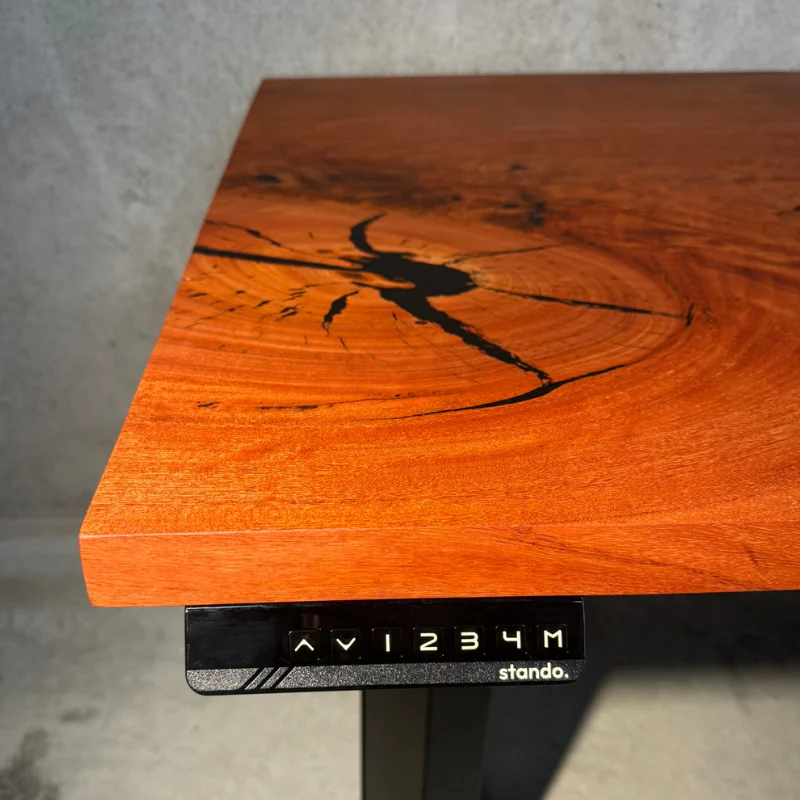
The Stando Heavy Duty Standing Desk has a lifting speed of 36 mm/s, putting it in the same range as the Desky Dual despite its considerably higher 300 kg weight capacity. It also features an anti-collision system that stops movement when the desk encounters an obstacle, an important safety feature for a desk designed to carry heavy equipment.
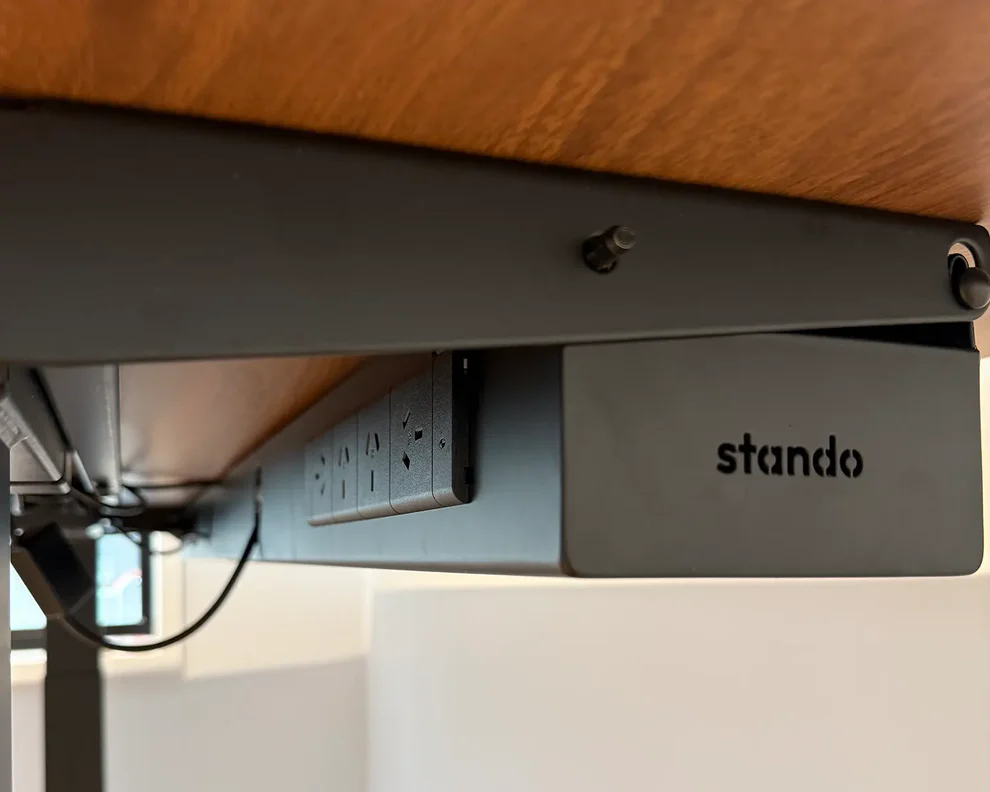
For cable management, I recommend Stando's optional integrated cable channel, particularly if you're setting up multiple workstations on one desktop. It keeps power boards and cables organised beneath the desk, while other available accessories include monitor arms, under-desk drawers and castor wheels.
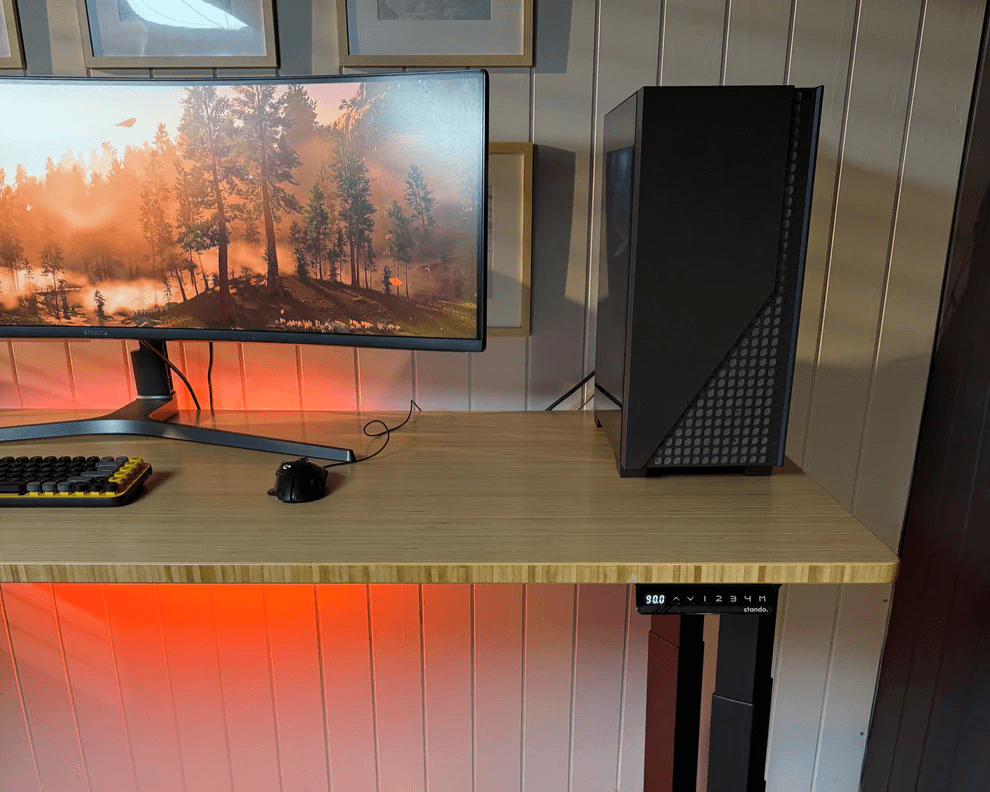
Stando also offers a choice of desktop materials and finishes, including Australian-made melamine and bamboo. The melamine desktops are available in custom sizes and finishes, which I consider particularly useful when configuring a large shared workstation.
Stando backs its Heavy Duty Standing Desk with a 10-year warranty, matching the coverage offered by the premium desks I've reviewed. According to the manufacturer's warranty policy, it covers:
"defects in materials, workmanship and function on all desk legs, lifting motors and structural support parts."
The warranty also covers the desktop and hand controller, but excludes normal wear and tear, scratches, accidental damage and faults caused by exceeding the desk's weight limit.
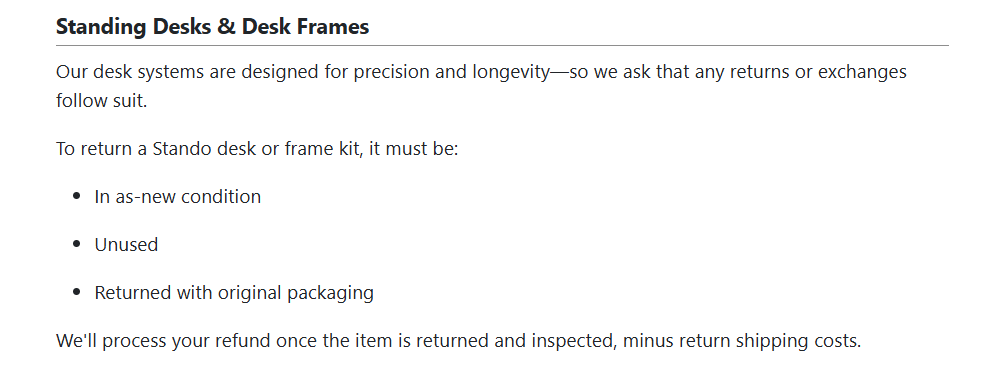
When I last reviewed Stando, the manufacturer didn't offer a trial period. That has since changed, with a 100-day money-back guarantee for standard-sized standing desks. This matches UpDown's return period, although Stando deducts return shipping costs from the refund and requires the original packaging.
The main limitation is that custom-made desks are excluded from change-of-mind returns, including custom sizes, finishes, timber desktops and desks with custom grommet holes. These purchases remain covered by the 10-year warranty and Australian Consumer Law protections if a fault develops.
Given the cost of the Heavy Duty range, I recommend confirming your desktop dimensions and specifications before ordering.
Final Verdict
With a 300 cm x 120 cm desktop capacity, a 300 kg lifting limit, a four-motor system, and an anti-collision safety feature, the Stando Heavy Duty Standing Desk is the best option for shared spaces. Here's how it compares with other sit-stand desks on this list:
| Category | Rating (5.0) |
|---|---|
| Build Quality | 4.7 |
| Ergonomics | 4.5 |
| Aesthetics | 4.4 |
| Cable Management | 4.0 |
| Customisability | 5.0 |
| Weight Capacity | 5.0 |
| Lifting Speed | 4.2 |
| Ease of Assembly | 4.3 |
| Value for Money | 3.7 |
| Return Policy | 4.0 |
| Warranty & Support | 5.0 |
| Overall | 4.5 |
While it lacks some smart features, it makes up for it with its durability, 10-year warranty, and solid build.
9. Desky Dual Mini
Best Small Standing Desk
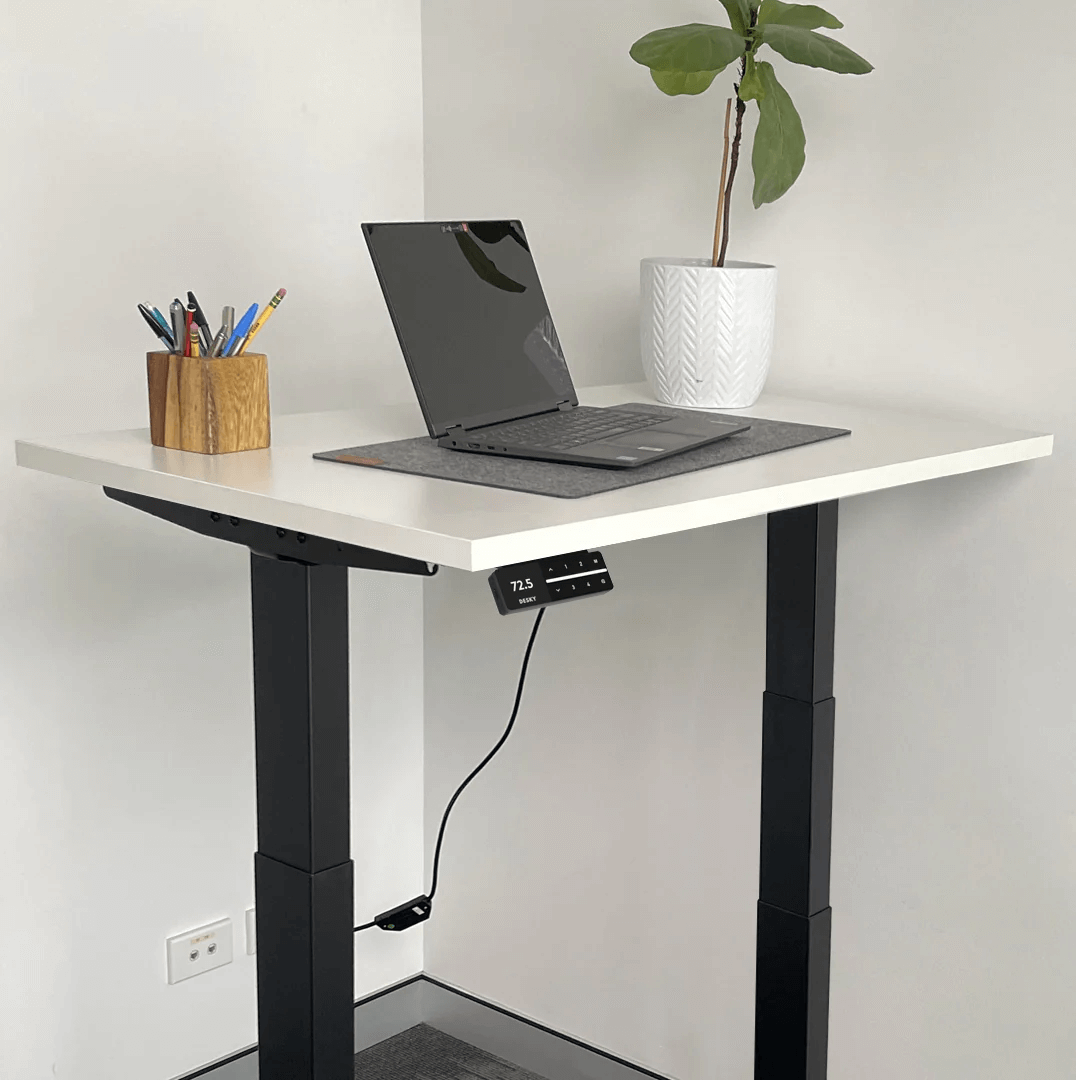
Height adjustment: 54 - 109 cm
Desktop sizes: 80 × 50 cm
Lifting speed: 36 mm/s
If you're looking for a compact standing desk for a teenager or a smaller home office, I recommend the Desky Dual Mini Sit-Stand Desk. Starting at A$765, it's considerably more expensive than most compact desks, but it retains the dual-motor lifting system, 150 kg weight capacity, Bluetooth controls and 10-year warranty of the full-size Desky Dual.
The main difference is the desktop size. While the standard Desky Dual comes in widths ranging from 120 to 200 cm, the Mini offers compact desktops between 80 and 110 cm wide, depending on the material.
I consider the 80 × 50 cm option suitable for a laptop and basic study accessories, while the larger configurations provide more room for a monitor, keyboard and other essentials.
My only reservation is the price. At A$765, the Desky Dual Mini costs considerably more than some full-size dual-motor desks. The Artiss, for example, offers a 140 × 70 cm desktop for around A$425, although it has a lower 100 kg lifting capacity, more basic controls and a shorter warranty.
I understand why Desky charges more for its hardware, but I still find the Mini expensive for the desktop space you get. I'd recommend it primarily for buyers who need a compact desk without sacrificing the features of a premium model.
Like the full-size Desky Dual, the Mini uses a dual-motor lifting system with a speed of 40 mm/s and a maximum weight capacity of 150 kg. It also retains the premium model's safety and control features, including a child lock, adjustable anti-collision detection, four programmable height presets, an 18W USB-C charging port and Bluetooth app connectivity.
For customisation, Desky offers five frame colours, including matte black, white and grey, alongside several desktop finishes. The standard melamine version comes in three sizes, while the hardwood range offers four, with widths ranging from 80 to 110 cm. The Mini also carries Desky's 10-year frame warranty, although its seven-day return policy remains one of my biggest reservations, particularly at this price.
Pros
- Dual motor
- High weight capacity
- Safety features and USB port
- Good warranty
Cons
- Pretty expensive
10. Standesk Pro Memory Desk Converter
Best Sit-Stand Desk Converter

Adjustable height: 10 - 54 cm
Keyboard/Mouse tray height: Up to 46 cm
Product weight: 38 kg
While I recommend a dedicated sit-stand desk for most people, a desk converter is a practical alternative if you want to keep your existing desk. My top pick in this category is the Standesk Pro Memory, a motorised upgrade to the original Standesk that combines electric height adjustment with programmable memory settings.
What impressed me most during testing was its stability and ease of use. The converter remained steady during height adjustments, with minimal wobble, while its three memory presets made switching between my preferred sitting and standing heights straightforward.
It adjusts from 10 to 54 cm above the existing desktop, providing a 44 cm adjustment range without replacing the entire workstation.

The Standesk Pro Memory also includes anti-collision protection and an automatic standby mode that reduces power consumption when the converter isn't in use. Its 90 × 52 cm work surface supports up to 50 kg, while the separate 80 × 30 cm keyboard tray holds another 5 kg. I consider this sufficient for most single- and dual-monitor setups.
The converter adjusts at 40 mm/s and occupies a 50 × 50 cm footprint on your existing desk, making it suitable for workstations with limited space. The keyboard tray adjusts from 12 to approximately 440 mm above the desk surface, allowing you to position your keyboard independently of the main work surface.
Portability is where I find the Standesk less practical. Its substantial weight makes moving it between workstations inconvenient, although it remains easier to relocate than a complete standing desk.
It's also relatively expensive for a converter, with the single-monitor version starting at A$835 and the three-monitor configuration costing A$1,075. At these prices, I'd recommend it primarily to buyers who want electric height adjustment without replacing their existing desk.
Standesk Pro also includes a VESA plate for easy monitor attachment, rounding out its ergonomic advantages. It’s backed by a 5-year warranty and a change-of-mind return policy within 14 days of purchase.
Pros
- Load capacity of 50 kg
- Very stable and quiet during use
- Electric converter
Cons
- Really expensive
- Not very portable
11. MOOV Desk Loaded
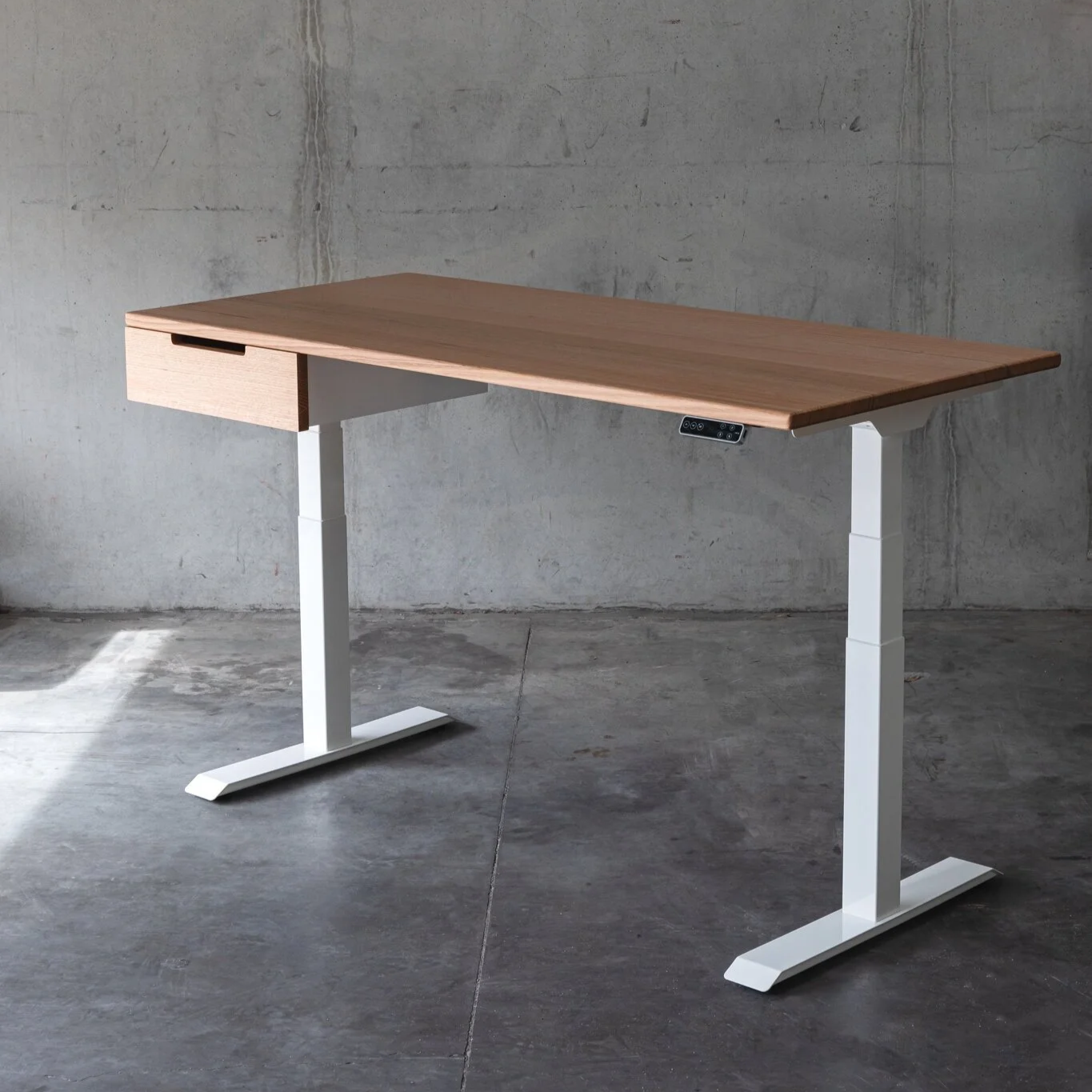
Adjustable height: 60 - 126 cm
Desktop sizes: 180 × 75 cm
The MOOV Standing Desk is a premium Australian-made option, with solid hardwood desktops manufactured in Melbourne. I rate its build quality and finish alongside UpDown and Desky, but I don't rank it among my top recommendations because of its pricing and relatively limited lifting capacity.
MOOV's hardwood desks currently start at around A$1,699, with more expensive configurations costing over A$3,000. Depending on the model, lifting capacities range from 120 to 140 kg, compared with the 150 kg offered by UpDown and Desky.
While I appreciate MOOV's locally manufactured timber desktops and overall construction, it's difficult to justify the higher-priced configurations when competitors offer comparable quality, greater lifting capacity and better value for money.

MOOV offers an integrated wooden drawer on selected standing desks, giving it a storage advantage over standard configurations from UpDown and Desky. However, its cable management system is sold separately, starting at A$99, so these accessories aren't necessarily included in the purchase price.
To put the pricing into perspective, UpDown includes a standard cable tray with its standing desks and offers optional drawers, while Desky sells hardwood desks with built-in drawers. Both manufacturers also offer frames with a 150 kg lifting capacity, compared with the 120–140 kg available across MOOV's current range.
Even after factoring in comparable storage and cable management accessories, I struggle to justify MOOV's more expensive configurations over UpDown and Desky. Its Australian-made hardwood desktops are attractive, but I believe the competing desks offer better overall value, particularly when lifting capacity and available features are considered.
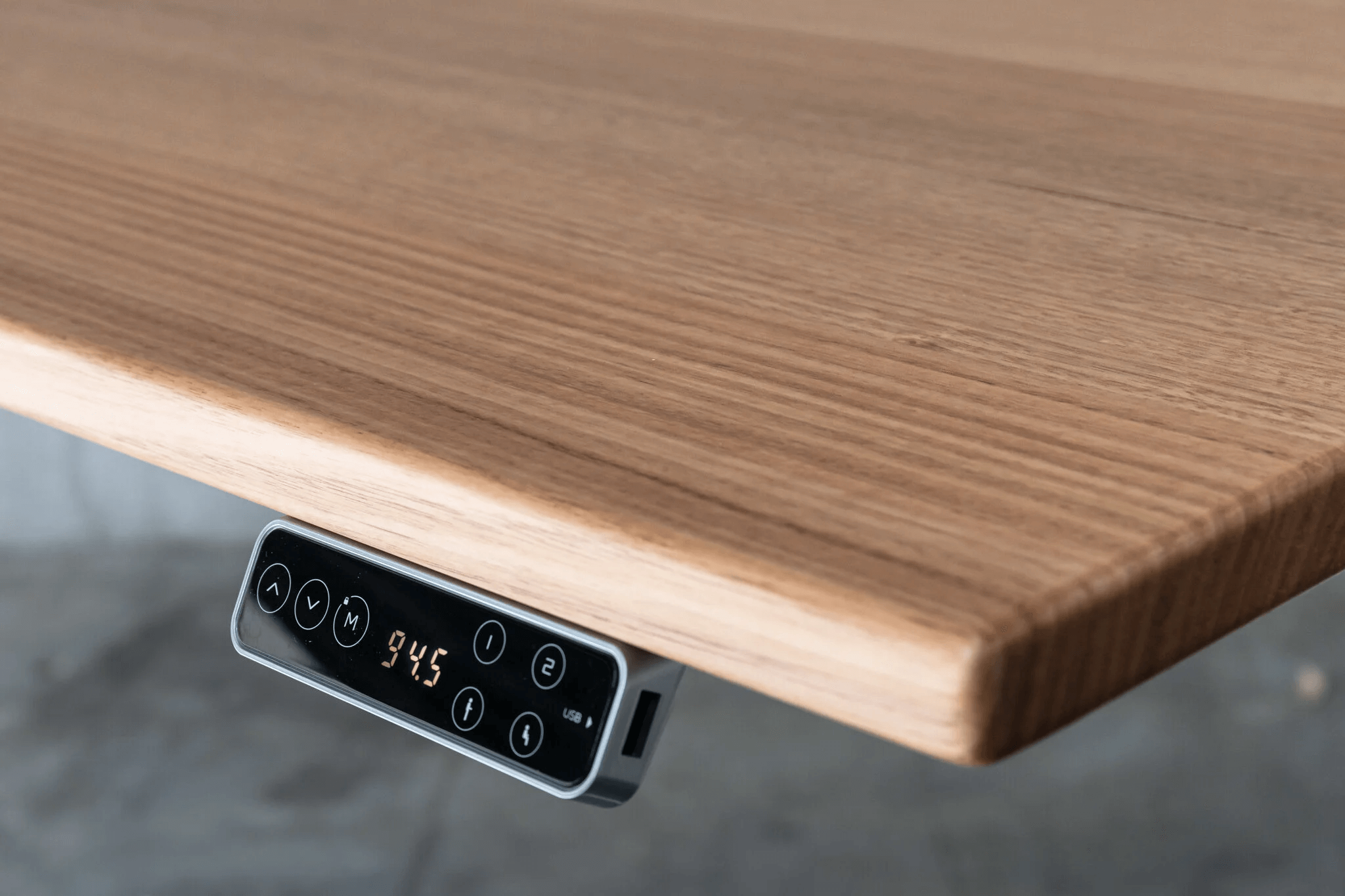
Price remains the main reason I don't rank MOOV among my top standing desks in Australia. However, I rate its locally made hardwood desktops highly, particularly the Tasmanian Oak, Blackwood and Recycled Messmate options.
MOOV uses a dual-motor lifting system and a control panel with four programmable height presets and a built-in USB charging port. The desk also includes anti-collision protection and a child lock, matching the safety features of its premium competitors.
Warranty coverage is equally competitive, with 10 years on the frame and five years on electrical components. While I consider these features strong, UpDown and Desky offer comparable performance and longer electrical warranties at more competitive prices.
MOOV also offers a 30-day return policy, which falls short of the 100-day trials from UpDown and Stand Desk. However, the conditions are more restrictive than the return period suggests. According to the manufacturer's return policy, desks must be:
"in unused condition and re-packaged into their original packaging."
This means you cannot assemble and test the desk before requesting a change-of-mind return. MOOV offers free collection for Melbourne customers, while interstate buyers must cover return shipping. Given the desk's premium price, I consider this another disadvantage.
Pros
- Premium build quality
- Safety features
- 10-year warranty
Cons
- High cost
- Limited wight capacity
12. Officeworks / Elite / JasonL / Kogan

Officeworks offers several electric height-adjustable desks, but I don't rate them as highly as my top picks. Two models worth considering are:
- Stilford S2: Dual motors, a 120 kg lifting capacity, three height presets and a 15-year frame warranty. However, it has a particleboard desktop, a 30 mm/s lifting speed and a five-year electrical warranty.
- Matrix Executive Electric Desk: Starting at A$399, this is a cheaper alternative with a 100 kg lifting capacity. But uses a single motor and offers a more limited height adjustment range. At this price, I'd choose the Artiss Standing Desk, particularly one of its dual-motor models.
I also have reservations about the Officeworks buying experience:
- In-store availability: Not every standing desk is available for display or inspection, so I'd recommend checking with your local store before visiting.
- Stock and delivery: Availability varies by location, and bulky furniture attracts additional delivery charges. I recommend comparing the final delivered price rather than relying on the advertised price alone.
- Other retailers and brands, including Elite, JasonL and Kogan, also offer electric standing desks. However, I haven't found a compelling reason to rank them above my leading recommendations.
My advice is straightforward:
For a premium standing desk, invest in the UpDown PRO, Desky Dual or Stand Desk PRO. Their build quality, lifting performance and warranty coverage justify the higher price.
For a budget standing desk, choose the Artiss, which offers the features I consider most important without the premium price tag.
Buying directly from the manufacturer also gives me greater confidence in after-sales support, although authorised retailers remain a reliable option and are responsible for meeting their obligations under Australian Consumer Law.
13. IKEA Standing Desk
Best IKEA Standing Desk
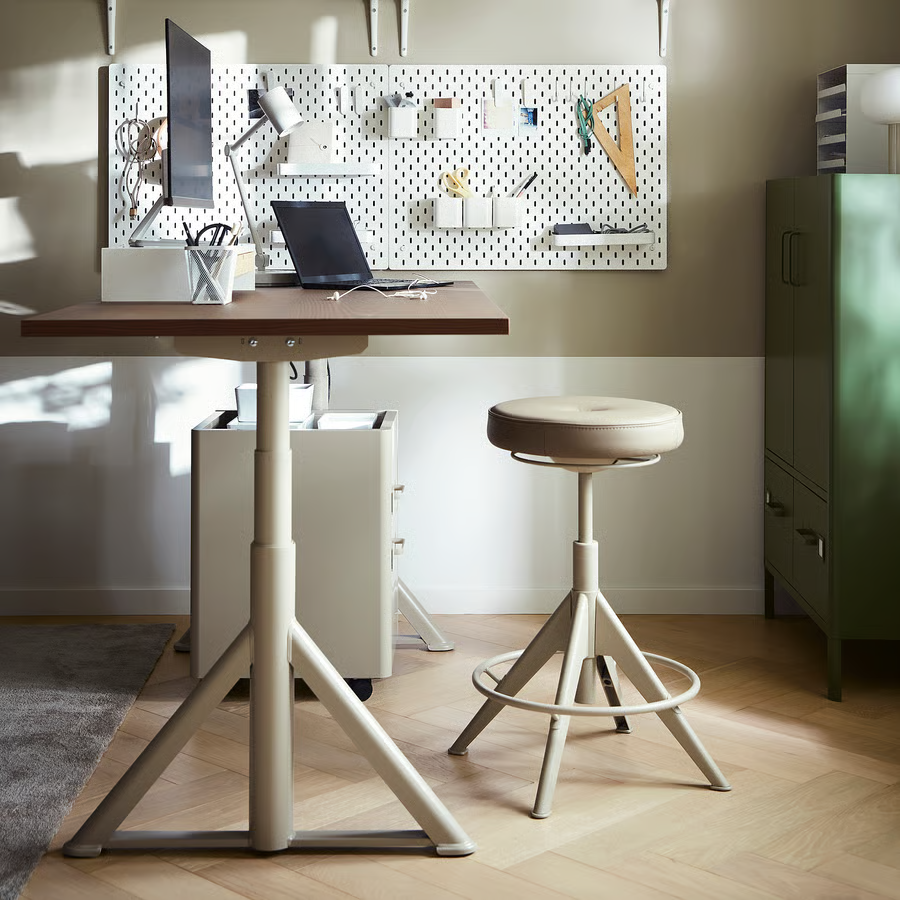
Height adjustment: 63 - 127 cm
Desktop sizes: 80 × 160 cm
Of IKEA's electric standing desks, I rate the IDÅSEN above the older BEKANT for its design and functionality. However, IKEA has since expanded its range with the MITTZON series, offering more options than these two models.
The IDÅSEN has a particleboard and fibreboard desktop with a recycled-paper honeycomb core and ash veneer finish, rather than solid timber. Its electric frame adjusts between 63 and 127 cm and supports a maximum load of 70 kg.
While the height range compares well with premium standing desks, the limited weight capacity puts it behind even the standard Artiss dual-motor desk, which supports 100 kg.

The IDÅSEN has one advantage over the standard Artiss Standing Desk: its maximum height of 127 cm, compared with Artiss's 120 cm. That makes it worth considering for taller users who need a higher working position. However, I'd still choose the UpDown PRO for its superior build quality, stability and lifting capacity.
I previously included the IKEA BEKANT near the bottom of my rankings, largely because of its lower price. I no longer recommend it, especially with better-value alternatives such as the Artiss and FlexiSpot E7 available.
IKEA has also expanded its standing desk range with the newer MITTZON, which offers dual motors and a 10-year guarantee.

One feature I don't particularly like about the IKEA IDÅSEN is its height adjustment system. Instead of dedicated memory buttons, IKEA relies on the LINAK Desk Control app to save and recall preferred heights.
I find this unnecessarily complicated. I don't want to reach for my phone every time I switch between sitting and standing, so I end up using the desk's manual up/down controller instead. For me, physical memory presets are far more convenient. Price and lifting capacity are two other areas:
- Price: The IDÅSEN currently costs A$899–A$949, while the 140 cm Artiss dual-motor desk starts at around A$425.
- Weight capacity: The IDÅSEN supports just 70 kg, compared with 100 kg for the standard Artiss dual-motor model.
These differences, combined with my experience using the desk, are why I rank the IDÅSEN at the bottom of my list.
At its price, I expect better controls and a higher lifting capacity, particularly when Artiss offers both for considerably less. For a more detailed breakdown, read my assessment of IKEA standing desks.
Discontinued or Out of Business
Over the years, I've added and removed several standing desks from this roundup as manufacturers discontinued models, rebranded or stopped trading. Some were strong competitors, but I no longer recommend products without reliable availability and after-sales support.
- EverDesk by Northday: The EverDesk range has been discontinued, although the company continues operating under the ErgoTune brand, known for its ergonomic office chairs. In 2025, ErgoTune introduced the Hexon, a new standing desk with integrated power management and modular accessories. However, it isn't currently listed on the Australian store.
- Zen Space Desks: Zen was previously one of my stronger recommendations, offering a 10-year warranty and 100-day return policy. The brand stopped trading under its original name, but the team behind it now operates Stando, which I've reviewed earlier in this guide. Stando also provides warranty support for existing Zen customers. I still have a prototype of Zen's corner desk, which I assembled for my review of the best corner desks in Australia.
- Kergo: Kergo's Smart Desk PRO was another promising option, particularly for its straightforward assembly and practical design. However, the model has been discontinued, and I couldn't verify ongoing manufacturer support, so I've excluded it from my current recommendations.
How to Read Our Standing Desk Ratings
You'll find a rating table under most desk reviews, showing how it scores across 11 categories. Each category is rated out of 5, but they don't contribute equally to the overall score.
I use a weighted average that prioritises the factors I consider most important when buying a standing desk. Build quality carries the most weight at 25%, followed by ergonomics and height controls at 15%, and value for money at 14%. Lifting speed accounts for just 2%.
The Overall (Weighted) rating at the bottom of each table combines these scores according to their assigned weights. This means a desk with excellent build quality can score higher overall than one with faster motors or better cable management.
The individual ratings reflect my hands-on experience where available, supported by manufacturer specifications and published policies. They are comparative editorial assessments, not laboratory test results.
Should You Buy a Standing Desk?
This is a personal choice, as the research on the benefits of standing desks is at best unclear. Plenty of studies show that prolonged sitting harms your health, with some linking it to cardiovascular disease, diabetes, and certain cancers.
However, other research suggests that the benefits of standing over sitting are only marginal. Take calorie burn, for example: standing burns roughly 88 calories per hour compared to about 80 when sitting, and some studies put the difference at just 5–10 calories per hour depending on your weight.
I believe using a standing desk can offer long-term benefits, but most of that depends on how you use it. Standing for long stretches isn’t any better than sitting for long stretches. The real advantage of a sit-stand desk is the flexibility it provides: switching between sitting and standing, changing your posture, and keeping your body in motion throughout the day. These habits contribute far more to your health than simply standing still at a desk.
Many people even position a standing desk near a treadmill to add more movement during meetings or light tasks. Others integrate short stretching or walking breaks into their workflow. And, of course, some people buy a standing desk and end up sitting at it all day anyway.
How I Evaluated the Best Standing Desks?
In the introduction, I mentioned the four factors I considered when evaluating all standing desks: quality, price, comfort, and design. But that's not all, there were equally minor important details that distinguished some desks from others that made and didn't make the shortcut.
For starters, some people value practicality, even when the desk is outright ugly, while others put design first at the expense of all else. But I think most people would not want to trade off too much practicality for design. I would argue that a strong fit for purpose is indicative of good overall design. So, for my analysis, I also considered the following as key criteria:
- Practicality – useful space, solid cable management, and dependable build quality.
- Aesthetics – how the desk looks in a space, minimalist or premium.
- Value for money – how well the desk’s features, performance, and build quality justify its price.
These aspects are not in any particular order. I picked the best sit-stand desks based on various angles and price ranges. As you'll notice, I've chosen the best overall standing desk, as well as options for those on a budget, specific niches, desks designed for taller individuals, and more.
In most niches, like gaming and shared space desks, competition and comparison remained within the niche. For example, the Secretlab Magnus Pro/Pro XL wasn't evaluated against the UpDown PRO to make the list, but other available gaming desks in Australia.
Standing Desks: Naming and Types

Various terms such as "sit-stand desk," "standing desk," "stand up desk," "standing table," "standing up desk," and "stand-up sit-down desk" are often used to describe the distinct types of standing desks that are available in Australia. But there are three main categories you must know:
- Height Adjustable Standing Desks
- Sit-Stand Desk Converters
- Fixed Height Standing Desks
We've looked at 15 height-adjustable standing desks and one sit-stand desk converter in this roundup. I have also purposely ignored Fixed-Height Standing Desks in this guide, as most home offices lack space for a dedicated stand-only desk. It's not something you would normally see in a home, as most people want to sit down at the desk sometimes.
Standing Desk Converters
A converter is an additional piece of equipment that can move up and down. You place it on your existing desk or another flat surface. People tend to buy standing desk converters when they want to save money or space, since they can fold them down and store them away.
Converters offer less workspace and cannot support as much weight as dedicated standing desks. However, they have their use case, so I included one in this list and have recently written a dedicated guide to standing desk converters available on the Australian market.
Adjustable Desk Types
Dedicated standing desks can be subdivided into manually adjusted, pneumatically adjusted, or electronically adjustable models. I have listed only electronically adjustable desks above.
- Manually adjusted desks: height is changed using hand-operated mechanisms such as knobs, pins, or cranks.
- Pneumatically adjusted desks: use gas-spring mechanisms to raise or lower the desk smoothly with minimal effort.
- Electronically adjustable desks: powered by electric motors (single or dual) that raise and lower the desk at the push of a button.
If you have a bad back, you don’t want to be bending under the desk to adjust it manually or cranking a handle every time you change positions.
Likewise, manually adjusted sit-stand desks tend to be less smooth during transitions; nobody wants expensive computers and monitors shaking or sliding around while the desk is being adjusted.
01 - Manual Adjustable Desks

A manually adjustable standing desk has a crank you turn to adjust the height. These desks generally have a dynamic weight capacity of 60-90 kg, meaning you can place up to 80 kg on your desk and move it without worrying about it breaking.
They can hold a monitor, a keyboard, a computer, perhaps some attractive plants, a lamp, and many other desk accessories of your choice. One thing to keep in mind with manual desks is that as the weight on the desk increases, it gets harder to turn the crank to adjust the height.
Manual standing desks are also much cheaper than electric ones, making them a great entry-level option.
02 - Pneumatically Adjustable Desks

Pneumatic desks are often overlooked in discussions about sit-stand options. They use a pressurised air cylinder to raise and lower the desktop. This gives them a clear advantage over manually crank-adjustable desks, which require more effort and are slower to adjust.
However, pneumatic desks often have a lower weight capacity than both manual and electric models. Most perform best with loads under 25 kg. While some models can lift to 70 kg, I haven’t found any in Australia that reach that level, and higher-capacity versions are generally priced similarly to fully electric sit-stand desks anyway. It's easy to see why they're less common.
03 - Electrically Adjustable Desks
The most popular type of standing desk is the electrically height-adjustable model. To adjust the desk’s height, you only need to press a button rather than a crank like the manual desk has. Electrically adjustable desks have a smooth transition between different heights.
The lifting capacity depends on the number and quality of the motors; typically, single-motor models rate from 66 kg to 80 kg. But they are not worth the slower speed and lower reliability.
I suggest you focus on dual-motor models, which can reliably lift significantly more (often up to 200 kg) than any manual or pneumatic desk.
Adjustable Desk Weight
Although most people will not load their adjustable desk to even half its weight capacity, it is essential to know what the desk can lift. Here are two terms to understand in this regard:
- Static rating: the maximum weight a desk can support while stationary.
- Dynamic rating: the maximum weight the desk can safely lift while moving up or down.
For adjustable desks, static weight capacity matters less than the lifting capacity. For example, if you place a 70 kg load on a desk with a dynamic rating of 130 kg, that's 54% of the desk's lifting capacity.
In contrast, for the same load on a desk with a 150 kg dynamic lifting rating, it's only 46%, indicating that the lifting mechanism is under less strain.
Standing Desk Accessories

While an adjustable standing desk is the starting point, it’s useful to remember your home office upgrade may not be complete unless you consider some of the following options:
- Cable management systems
- 'Power bars' with power sockets and USB ports for charging phones
- Monitor arms or stands
- Laptop stands
- Draws or other storage
- Sit-stand stools or chairs
- Balance boards
- Anti-fatigue mats
- Under-desk treadmills
Some of these accessories come packaged with the sit-stand desk, but most are not and are often available as optional add-ons. For a complete setup, I have a dedicated guide covering all the essential standing desk accessories to improve your workspace experience.
How to Build Your Own Sit-Stand Desk?

I often recommend purchasing a complete standing desk directly from a manufacturer because it offers many benefits.
You get
- a warranty period,
- dedicated customer support,
- professionally engineered designs,
- and some useful accessories.
However, it's not the only way to own a standing desk. You could also build one yourself by purchasing the desk parts separately.
To do this, start by researching and choosing a robust, adjustable frame that supports a suitable adjustable height. Most sit-stand desk manufacturers on this list offer affordable desk frames.
Once you have this in place, choose a desktop that fits your style and workspace requirements to complete your desk. This is where things get more DIY, as you can use any suitable wood without making a heavy purchase. Many DIYers often choose reclaimed wood, solid timber planks, or even quality plywood to create a custom desktop that fits their budget.
The DIY process itself is practical and rewarding. It provides a sense of accomplishment and allows you to add personalised features, such as cable management solutions or mounting points.
Standing Desk Deals in Australia
It is worth mentioning that while I keep this article up to date and check both the normal and discounted prices, the deals they offer do not always overlap.
- All of the top-quality manufacturers that sell standing desks in Australia nearly always have some kind of promotion running. So you should take their non-discounted price with a pinch of salt and always compare the final prices you find once you click through to their site.
- Consider what added extras you actually want and what they are worth to you.
- The Artiss is available from many different online stores, so I keep updating these options here to make it easy to find the best deal.
Why Did I Review Standing Desks in Australia?
Some time ago, I decided to get an adjustable standing desk.
The problem was that the Australian market had so many standing desks available and I didn't have the time to research, so I just went to IKEA and picked up something cheap, I ended with the BEKANT. My wife hated it and didn't want it moving with us to our new house! So I started researching something better.
All the existing desk reviews and guides of the best standing desks in Australia were lacking in detail, and they often even got the specs wrong. After looking at these, I decided to invest a chunk of my time in research. The research took much longer than I expected. With more than two weeks of evenings, I decided I would save others' time by sharing my research.
For full disclosure, many of the links in this article are affiliate links, meaning I may get a small commission if you buy a desk I recommend. The ranking is not based on financial incentives, as it didn't start with one, and these desks, in my opinion, are truly the best in Australia.
The commissions this site earns make spending the time writing and publishing new articles worthwhile.
Frequently Asked Questions (FAQs)
Here are some frequently asked questions about the best standing desks in Australia, their appropriate use, and maintenance.
Is a rising desk worth it?
Yes, if you want to alternate between sitting and standing. A good standing desk can help reduce discomfort, break up prolonged sitting periods, and support better posture. It won’t fix everything on its own, but used correctly, it can make your workspace more comfortable and functional.
How long do adjustable desks last?
Most budget and mid-range adjustable desks come with a 3–5 year warranty, and the better brands offer up to 10 years. With regular use and proper care, a quality sit-stand desk should last many years beyond its warranty and remain reliable throughout its lifespan.
Do electric standing desks use a lot of electricity?
No, most standing desks use only about 150 W when in active use. The electric power only powers the hydraulics, pneumatic lifts, or motorised lift system when switching between sitting and standing.
Which size of standing desk is best?
For most people, a desktop between 120–180 cm wide and 70–80 cm deep works best. This gives you enough space for a monitor, laptop, keyboard, and mouse, with room left to move comfortably.
Wrapping Up
There’s no single “best” standing desk for everyone.
The options I’ve recommended all offer strong lifting performance and reliable functionality, with the fundamental differences coming down to design, materials, and price. Choose the standing desktop and frame that best fit your space, your workflow, and your budget.
If you found this research helpful or have any questions about specific models, feel free to reach out in the comments: I’d be happy to help.