A clean backyard can make your outdoor space feel more inviting, but dirty pavers can quickly make the whole area look neglected. Over time, pavers can collect dirt, stains, moss, weeds, and grime, leaving them dull and worn.
The good news is that most pavers can be cleaned and refreshed with the right approach. In this guide, we’ll look at simple ways to remove stains, clear build-up, and bring your patio, driveway, or outdoor area back to life.
What You Need
Before you start cleaning your pavers, make sure you have the basic tools ready. You will need a broom or leaf blower to remove loose dirt and leaves, a mild detergent for cleaning, a garden hose for rinsing, and a soft-bristle brush for scrubbing without damaging the surface. A good paver sealer is also useful for protecting the pavers after cleaning.
Some extra tools that make the job easier include a pressure washer to speed up the cleaning process and a weed trimmer or an anti-weed solution to help clear grass or weeds between the joints. You may also need a bucket for mixing your cleaning solution and a stiff-bristle brush for tougher stains.
Before using any cleaning products, protect yourself and the surrounding area. Wear gloves and safety goggles, and cover nearby outdoor furniture or decorative items to prevent splashes or damage.
Choosing the Right Paver Cleaning Products

Choosing the right cleaning product depends on your paver type and the stains you need to remove. Always test any cleaner on a small hidden area first to ensure it does not damage or discolour the surface.
Mild detergent works well for regular cleaning. It is gentle on most pavers and can remove light dirt and grime. Use specialised paver cleaners for tougher stains and built-up grime. They are made specifically for pavers and may come as alkaline, acid-based, or enzymatic cleaners.
Dish soap and warm water are a simple option for light cleaning; affordable, easy to mix, and gentle on most surfaces. Likewise, homemade solutions such as vinegar, baking soda, lemon juice, and water can help with light stains. Albeit, but not as strong as commercial cleaners.
We recommend environmentally friendly cleaners as a safer option for plants, soil, and surrounding areas. They can clean well, but may need more effort on stubborn marks.
Setting the Stage
Start by clearing the paver area.
Remove outdoor furniture, potted plants, and decorative items, then sweep away leaves, twigs, dirt, and other loose debris with a broom or leaf blower. Check for weeds, moss, or grass growing between the pavers and remove them by hand, with a weed trimmer, or with a suitable weed killer.
Once the area is clear, dampen the pavers with water using a garden hose or bucket. This helps stop the cleaning solution from drying too quickly. Set up your brushes, buckets, and cleaning products nearby so everything is within reach before you begin.
Step-by-Step Paver Cleanup Guide
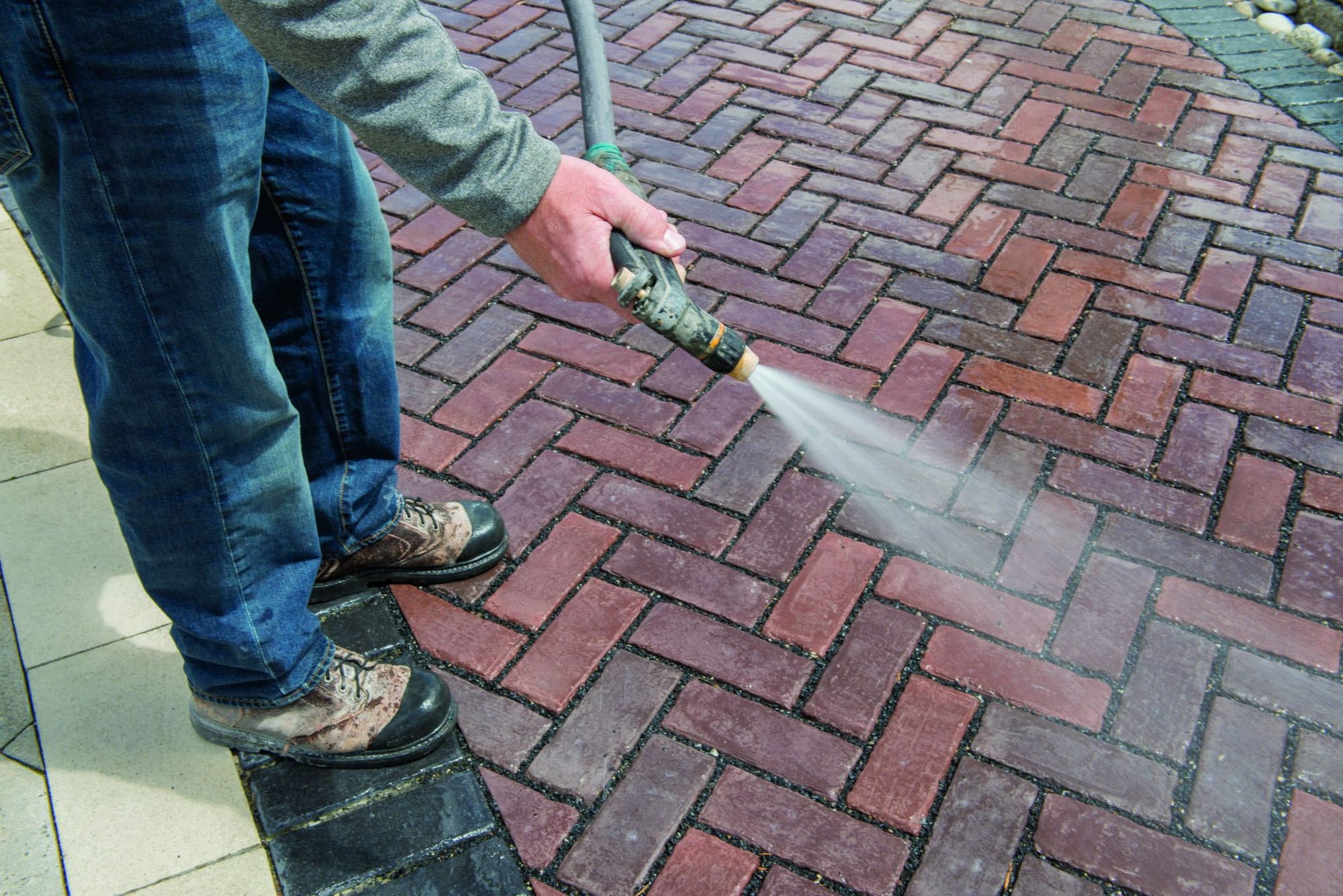
Now that you've prepped the area, it's time to dive into the cleanup process. Follow these steps to restore the shine to your pavers:
Apply Cleaning Solution
Choose an appropriate cleaning solution for your pavers. This can be a paver-specific cleaner, a mild dish soap and water mixture, or a recommended commercial cleaning product. Refer to the product's instructions for the correct dilution ratio.
Scrub the Pavers
Armed with a stiff-bristle brush or a paver cleaning brush, gently scrub the pavers with the cleaning solution. Pay attention to any stubborn stains or heavily soiled areas. Be cautious not to apply excessive force to avoid damaging the paver surface.
Rinse Thoroughly
Once you've completed the scrubbing process, rinse the entire area with your garden hose. Ensure that all cleaning solution and debris is thoroughly washed away. Pay special attention to the joints between pavers to eliminate any residual dirt.
Inspect and Repair
Take a moment to inspect your pavers. If you notice any damaged or broken pavers, consider contacting a professional for replacements. Additionally, if you use sand between the pavers, ensure you top it up to maintain the stability of the surface.
Cleaning Pavers with a Pressure Washer
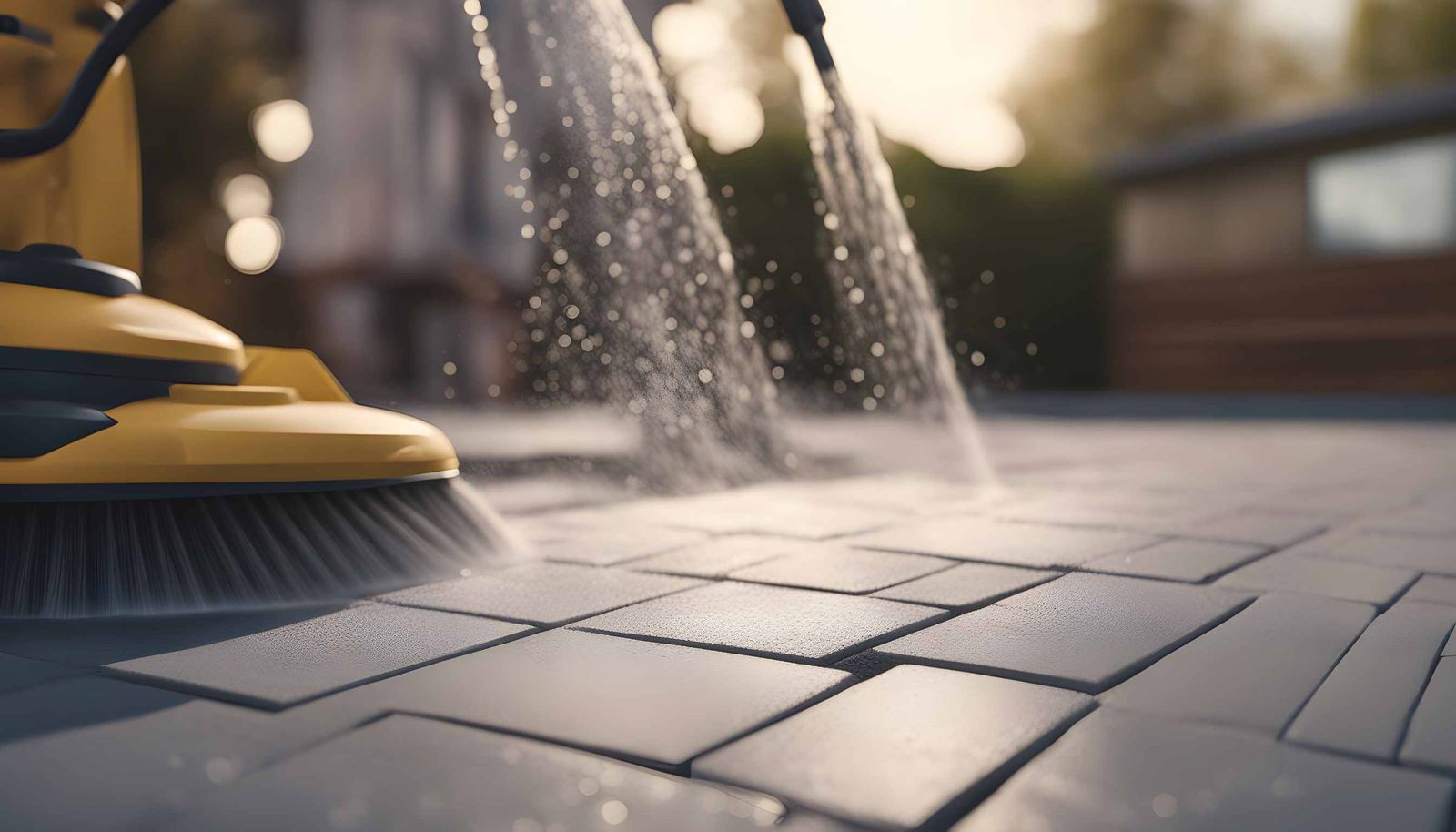
A pressure washer can clean patio pavers quickly, but it must be used carefully. Too much pressure or the wrong technique can loosen joint sand, damage the surface, or leave uneven marks.
Here is how to use a pressure washer safely when cleaning pavers:
Safety First
Always wear safety gear, including gloves, goggles, and closed-toe shoes with a good grip. The water stream from a pressure washer can be potent, and protective eyewear is essential to prevent accidental injuries.
Choose the Right Pressure
Using the highest setting isn't always the best option. For standard concrete pavers, a medium-pressure setting should suffice. If your pavers are made of softer material like sandstone, consider starting at a lower pressure and adjusting as necessary.
Select the Appropriate Nozzle
Pressure washers come with various nozzles, each providing a different spray pattern. For pavers, a 25-degree nozzle (often colour-coded green) is a good starting point. It offers a balanced spray that's powerful enough for cleaning but gentle enough to protect the integrity of the pavers.
Wet the Pavers
Before introducing the pressure washer, dampen the pavers with regular water. This helps to prepare the surface, making it more receptive to the cleaning process.
Apply Detergent (If Necessary)
For exceptionally grimy pavers, you might want to use a detergent. Most pressure washers have a detergent dispenser. Ensure you're using a detergent suitable for pressure washers and one that's safe for your paver type. Apply the detergent and let it sit for 5-10 minutes, but don't let it dry.
Hold at a Safe Angle
Always hold the pressure washer wand at a 45-degree angle to the paver surface. This ensures the water efficiently sweeps away dirt and grime without risking damage to the paver.
Work in Sections
Divide your patio into sections and tackle one at a time. This systematic approach ensures you don't miss spots and allows for a more thorough cleaning.
Maintain Consistent Distance
For optimal cleaning and to prevent damage, maintain a consistent distance of 6-12 inches between the nozzle and the pavers. This might vary slightly based on your specific pressure washer and the dirt level, but it's a reliable rule of thumb.
Rinse Properly
Once the detergent has done its job, ensure you rinse the pavers thoroughly. Any leftover detergent can leave unsightly residues and potentially harm the paver's finish.
Let it Dry:
After you've finished pressure washing, allow the pavers to dry completely. This can take anywhere from a few hours to a full day, depending on the weather and sunlight exposure.
How Not to Clean Patio Pavers?

Avoid using tools or products that can damage your pavers. Wire bristle brushes can scratch the surface and weaken the protective seal, while harsh acidic cleaners can cause discolouration or deterioration. Bleach can also change the colour of your pavers and leave the surface looking patchy.
Likewise, be careful with pressure washers as well. They can clean quickly, but too much pressure can strip the seal, loosen joint sand, or damage the finish. If you use any cleaning chemical, always follow the manufacturer’s instructions for mixing, handling, and disposal.
How to Tackle Various Stains?
Different stains need different cleaning methods.
For grease and oil, cover the stain with baking soda or cat litter to absorb the oil, then scrub with dish soap, water, or a degreasing cleaner. For organic stains from leaves, mildew, or dirt, remove the debris first, then use warm water and mild detergent before rinsing well.
If you encounter rust stains, treat them with a rust remover made for pavers, not bleach, as bleach can make the stain worse. For wine, coffee, or other tannin stains, scrub with warm water and mild detergent. If the stain remains, use a concrete or paver cleaner.
White powdery deposits, known as efflorescence, are best cleaned by scrubbing the area with a stiff brush and rinsing with water. Paint or ink stains should be treated quickly with a suitable paint or graffiti remover. Always test any cleaner on a small, hidden area before using it on the stain.
How to Maintain Your Pavers?
After cleaning your pavers, sealing helps protect them from stains, weather damage, and general wear. It can also improve their colour and keep the surface looking cleaner for longer.
Here are some simple sealing tips to help extend the life of your pavers:
- Use a sealer made for your paver type, such as concrete, brick, or natural stone.
- Make sure the pavers are fully clean and dry before sealing. Dirt or moisture can affect the finish.
- Seal your pavers on a dry, mild day. Avoid very hot, cold, or rainy weather.
- Several thin coats usually work better than one thick coat. Let each coat dry before adding another.
- Most sealers need 24 to 48 hours to dry properly. Avoid walking or placing furniture on the surface during this time.
- Re-seal your pavers every two to five years, depending on weather, use, and the type of sealer.
Proper maintenance, including regular re-sealing, is the key to preserving your investment in your outdoor space.
Common Paver Issues and Solutions
In the world of pavers, a few hiccups can arise over time. Don't fret; here's how to tackle some paver problems:
| Problem | Simple Fix |
|---|---|
| Paver shifting | Lift the loose paver, add sand underneath, and place it back evenly. |
| Cracked grout | Remove the damaged grout and replace it with fresh grout mix. |
| Discolouration | Use a suitable stain remover to treat the affected area. |
| Surface erosion | Add more sand or gravel between the pavers to improve stability. |
| Deep cracks | Call a professional to assess and replace the damaged pavers. |
| Sinking pavers | Lift the sunken pavers, add more sand, and reseat them properly. |
Knowing how to handle these common paver predicaments will keep your outdoor space looking pristine and problem-free. It's all part of the journey to a picture-perfect patio or charming courtyard.
Paver Cleaning FAQs
Have you got any questions about paver cleaning? We've got answers.
Will Vinegar Damage Your Patio Pavers?
While vinegar is a versatile cleaner, it could be better for patio pavers. Its acidity can potentially harm the paver's surface and sealant. Opt for gentler, paver-friendly cleaning solutions instead.
What Is the Best Thing to Clean Outdoor Pavers With?
The best cleaner for outdoor pavers depends on the type of stain and the paver material. Mild detergents, specialised paver cleaners, and eco-friendly options are excellent choices. Remember to follow the manufacturer's recommendations.
How Do You Clean Pavers Chemically?
Chemical cleaning of pavers involves using specific cleaning solutions tailored to the type of stain. These solutions break down and lift stains from the pavers. Always follow safety precautions and product instructions.
What Is the Easiest Way to Clean Pavers?
The easiest way to clean pavers starts with regular maintenance. Sweeping, removing debris, and using a garden hose with mild detergent are simple yet effective methods. For deeper cleaning, consider a pressure washer.
How Do I Make My Patio Pavers Look New?
To rejuvenate your patio pavers, start with a thorough cleaning. Remove stains, weeds, and grime. Next, consider sealing your pavers to enhance their appearance and protect them from future wear and tear.
Summary
With the right tools and cleaning products, you can restore tired-looking pavers and make your outdoor space look fresh again. Regular cleaning, stain removal, and proper sealing will also help protect the surface and keep it in better condition for longer.
Once your pavers are clean, your patio, driveway, or backyard will feel more inviting. Whether you use the space for barbecues, quiet afternoons, or relaxed evenings outside, clean pavers can make the whole area look more cared for and enjoyable.