
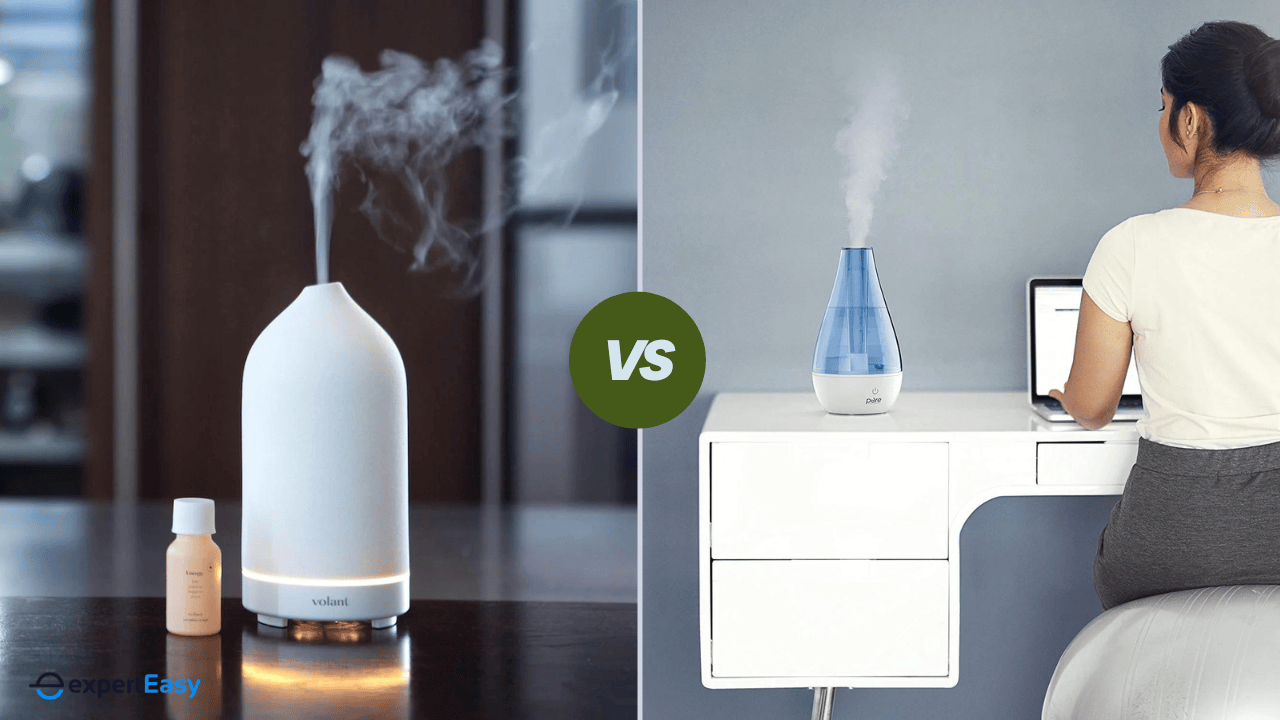
Humidifiers and diffusers are commonly used to improve indoor air quality, but they serve different purposes. Choosing the right one depends on your specific needs and environment.
In this article, we compare how each device works, outline its advantages and limitations, and highlight key differences to help you make an informed decision.
What is a Humidifier?

A humidifier is a device that increases indoor humidity by releasing water vapour into the air. It is especially helpful during colder months when heating systems dry out indoor air.
Adding moisture to the air can reduce dry skin, nosebleeds, throat irritation, and snoring. It can also make breathing more comfortable and help ease symptoms linked to allergies, asthma, and other respiratory conditions.
Types of Humidifiers
Based on their mode of operation, there are four main types of humidifiers.
- Ultrasonic: Use high-frequency vibrations to create a fine mist.
- Evaporative: Use a fan and wet wick filter to release cool mist.
- Impeller: Use spinning discs to generate mist.
- Central: Connected to the home’s HVAC system to humidify the entire house.
What is a Diffuser?

A diffuser is a device that disperses essential oils, perfumes, and other fragrances into the air to create an aromatic environment.
It breaks essential oils into smaller molecules and then disperses the mist into the air. These oils can have a variety of benefits, including improving mood, reducing stress, and even helping to purify the air.
Types of Diffusers
Based on their mode of operation and power source, there are seven types of diffusers for your home or office.
- Ultrasonic: Uses ultrasonic waves to convert water and essential oils into a fine mist.
- Nebulizing: Uses pressurised air to break essential oils into a concentrated fine mist.
- Evaporative: Blows air over an oil-soaked pad to release fragrance.
- Heated: Uses heat to release essential oils into the air.
- Electric: Uses a fan powered by electricity to disperse fragrance.
- Candle: Uses a candle flame to heat essential oils and release scent.
- Reed: Uses reeds placed in a bottle of essential oil to naturally diffuse fragrance.
Comparing Humidifiers and Diffusers
Before choosing between a humidifier and a diffuser, it's important to understand their strengths, benefits, and handicaps. Let's go over a few of them.
#1 - Use Case
The main difference between humidifiers and diffusers is the type of benefit they offer. Humidifiers add moisture to the air, while diffusers release essential oils to provide aromatherapy benefits.
#2 - Health Benefits
Humidifiers help alleviate symptoms of dry skin, nosebleeds, and even snoring. The humidifier mist reduces dryness in the air, which helps to soothe dry, irritated skin and reduce static electricity.
Diffusers, on the other hand, help improve mood, reduce stress, and purify the air. Thus, humidifiers have more physical benefits to the body, whereas diffusers provide mental benefits.
3. Time of use
Humidifiers are designed to keep the air in a room from becoming too dry. They are most beneficial during the winter months to maintain a balanced humidity level between 40 and 60 per cent.
Diffusers are used all year round, although the oils may have a different effect depending on the season. They work best in areas with low humidity and provide aromatherapy benefits.
4. Water holding capacity
Humidifiers require a refillable water reservoir and will need to be refilled every few days. They typically can hold a half-gallon of water, while the reservoir of some diffusers holds less than a cup of water. This is because diffusers do not hold water but essential or scented oils.
5. Maintenance
Humidifiers require regular cleaning and refilling, just like diffusers, which also often require the replacement of essential oils and cleaning of the diffuser itself.
6. Cost
For the cost, humidifiers are typically more expensive than diffusers. Humidifiers often require filters and regular maintenance, whereas diffusers rarely need special upkeep. You must, however, be sure to change your oils as and when there's a need for a top-up or refill.
Which is Right for Your Home?
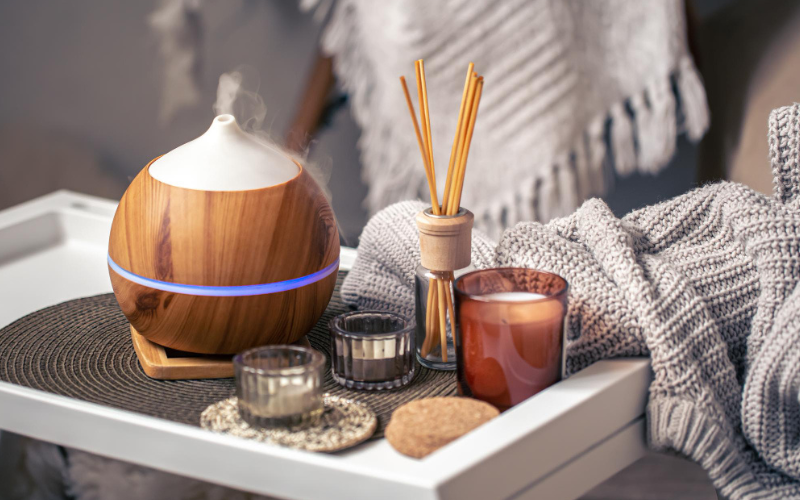
Deciding between a humidifier or diffuser for your home boils down to your individual needs. If you have allergies, asthma, or any other breathing issues, a humidifier may be a better choice. Humidifiers help reduce the symptoms associated with these ailments, as well as help ease dry skin and protect wooden furniture from cracking.
Diffusers, on the other hand, can provide relief from stress and anxiety, and even improve sleep. They are also great for diffusing essential oils, which can help cleanse the air and add a pleasant scent to your home.
If you need both moisture and fragrance, consider using an ultrasonic humidifier that can be used as a diffuser too. Note that not all humidifiers can be used as diffusers by adding oil to water. This can damage your humidifier. Choose a humidifier with a built-in aromatherapy function to combine the two features in a single device.
Frequently Asked Questions (FAQs)
Here are some frequently asked questions on the use and importance of humidifiers and diffusers.
Can I use a humidifier and a diffuser at the same time?
Yes, you can use a humidifier and a diffuser at the same time. A humidifier adds moisture to the air, while a diffuser disperses essential oils for fragrance. If you prefer a single device, some humidifiers are designed to accommodate essential oils.
Are there any safety concerns with using a humidifier or diffuser?
Yes, there are a few safety considerations. Always follow the manufacturer’s instructions to reduce the risk of electrical faults or fire hazards, and turn the device off when leaving it unattended. Regular cleaning is essential, as stagnant water can lead to mould or bacterial buildup.
Can I use any type of essential oil in a diffuser?
No, not all essential oils are suitable for use in diffusers. Use high-quality, pure oils specifically labelled for diffuser use. Some oils contain additives or compounds that can damage the device or cause irritation when inhaled.
Certain oils may also be unsuitable for people with specific medical conditions, so it is important to choose carefully and follow product guidelines.
 Mark Thompson
Made a Choice?
Humidifiers and diffusers are beneficial for improving the air quality in your home, but they bring different benefits. Consider your specific needs and preferences when deciding which one to choose.
And whether you choose a humidifier or a diffuser, make sure to follow the manufacturer's instructions and keep the device clean to ensure safe and effective use. For Aussies, our guide on the best humidifiers has the best models to choose from.









)
